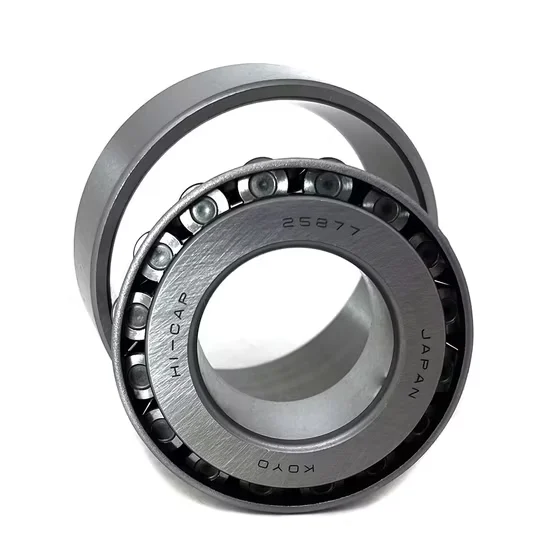
Buying the cheapest Koyo bearing is often the most expensive mistake a machine shop can make.
Selecting genuine Koyo precision bearings for machine tools requires verifying exact tolerance grades like P4 or P2 and ensuring reliable supply channels to prevent catastrophic spindle failures. Standard grade bearings, even if authentic, will fail instantly in high-speed spindle applications due to excessive internal clearance and heat generation. The core challenge for buyers is not just finding the brand, but securing the correct precision class with full traceability to avoid counterfeits that plague the global market.
I still remember the smell of burnt oil and metal dust in a CNC factory near Ho Chi Minh City. The production manager was frantic. An entire batch of precision aerospace components had been scrapped because the spindle runout exceeded tolerances after just a few hours of operation. They had switched suppliers to save costs, buying what they thought were Koyo angular contact ball bearings. When I pulled one out for inspection, the laser marking looked right, but the feel was wrong. The grease was inconsistent, and the raceway surface lacked the mirror-like finish of genuine premium steel. More critically, they had purchased standard P0 grade bearings instead of the required P4 precision class. The internal clearance was far too loose for a high-speed spindle, causing vibration that destroyed the workpiece surface finish. This incident reinforced a hard truth: in machine tool maintenance, the channel you buy from is as critical as the brand itself.
This guide breaks down how to select the right specifications, identify fakes, and source these critical components reliably. Whether you are an OEM building new machines or an MRO buyer keeping old ones running, understanding the nuances of Koyo precision bearings for machine tools is essential for operational stability.
What Precision Grades Do Machine Tool Spindles Actually Need?
High-speed spindles strictly require P4 or P2 angular contact bearings, not standard industrial grades.
Many buyers assume that any bearing with the Koyo logo is suitable for their CNC machine. This is a dangerous misconception. Bearings are manufactured to different tolerance classes defined by international standards. For general industrial motors, a standard P0 (or ABEC 1) grade is sufficient. However, machine tool spindles operate at high rotational speeds and require extreme rigidity and minimal vibration. Using a standard grade here leads to rapid heat buildup, premature wear, and loss of machining accuracy.
The key parameters to verify are the tolerance class and internal clearance. For most high-performance CNC spindles, the ISO 492 standard defines P4 (ABEC 7) as the minimum requirement, with P2 (ABEC 9) used for ultra-high-speed or ultra-precision applications. Additionally, the internal clearance must be tightly controlled, often specified as C1 or C2 for spindle applications, which is significantly tighter than the standard C3 clearance found in general-purpose bearings.
| Parameter | Standard Industrial Grade (P0) | Precision Spindle Grade (P4/P2) | Impact on Machine Tool |
|---|---|---|---|
| Tolerance Class | P0 (Normal) | P4 (Precision) or P2 (Super Precision) | P0 causes excessive runout and vibration in spindles |
| Internal Clearance | C3 (Standard) | C1 or C2 (Reduced) | C3 allows too much play, leading to chatter marks |
| Surface Finish | Standard Grinding | Super Finished / Polished | Rougher surfaces generate more heat at high RPM |
| Noise Level | Higher | Very Low | High noise indicates poor balance and fit |
| Typical Application | Gearboxes, Motors, Conveyors | CNC Spindles, Precision Lathe Heads | Wrong grade leads to scrapped parts and spindle damage |
A distributor in Southeast Asia once shared how his client, a mid-sized automotive parts manufacturer, reduced their spindle scrap rate noticeably after switching from mixed-grade counterfeit bearings to verified Koyo precision bearings for machine tools. The initial cost was higher, but the elimination of unplanned downtime and material waste resulted in substantial long-term savings. The key was ensuring every batch came with certification proving the P4 tolerance class.
When sourcing, never accept “standard” Koyo bearings for spindle replacement. Always specify the precision grade explicitly. If a supplier cannot provide documentation confirming the P4 or P2 class, they are likely offering inferior stock that will compromise your machine’s performance.
How to Identify Genuine Koyo Bearings from Counterfeits?
Verify laser marking, packaging quality, and demand full traceability certificates like the Certificate of Origin.
The market for popular bearing brands is flooded with counterfeits. These fakes range from low-quality imitations made with substandard steel to “re-boxed” lower-grade bearings sold as precision items. Identifying genuine products requires a multi-layered approach. Visual inspection is the first step, but it is not enough. Authentic Koyo bearings feature precise, deep laser etching that is difficult to replicate perfectly. The font should be clean, uniform, and resistant to rubbing. Fake markings often appear shallow, uneven, or use incorrect fonts.
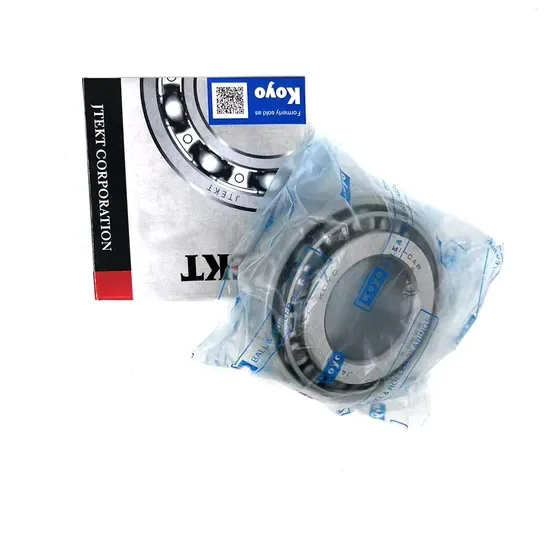
Packaging is another critical indicator. Genuine bearings come in high-quality boxes with specific branding elements, barcodes, and batch numbers that match the bearing itself. The inner wrapping should be clean, using anti-corrosion paper that smells distinctively of protective oil, not cheap plastic or dry paper. However, sophisticated counterfeiters have improved their packaging, making visual checks unreliable on their own.
The most robust method is demanding traceability documentation. A reputable supplier must provide a Certificate of Origin (COO) and mill test certificates that trace the bearing back to the manufacturer’s production facilities. If a seller hesitates to provide these documents or offers vague excuses, it is a major red flag.
| Verification Method | Genuine Product Characteristics | Counterfeit Warning Signs |
|---|---|---|
| Laser Marking | Deep, clean, uniform font; hard to rub off | Shallow, uneven, wrong font; rubs off easily |
| Packaging | High-quality box, correct barcode, batch match | Flimsy box, mismatched codes, poor print quality |
| Documentation | Full COO, mill certs, traceable batch numbers | Missing docs, vague origins, refused requests |
| Steel Quality | Consistent hardness, mirror-like raceway | Inconsistent hardness, visible scratches or pits |
| Price | Competitive but realistic for precision grade | Suspiciously low compared to market average |
A buyer in Latin America recently faced an emergency situation when a heavy milling machine broke down. The local supplier offered a “genuine” replacement at a steep discount. Upon inspection, the bearing lacked the proper laser depth and the accompanying paperwork was generic. By refusing this offer and sourcing from a verified global partner, the buyer avoided a potential second failure. The genuine Koyo precision bearings for machine tools they eventually installed restored the machine to full capacity within days, minimizing unplanned downtime.
Always insist on seeing the documentation before payment. A legitimate supplier will have no issue providing proof of authenticity. This step protects your investment and ensures the reliability of your machinery.
Which Koyo Bearing Types Fit Different Machine Tool Components?
Angular contact bearings are for spindles, cylindrical rollers for feed axes, and tapered rollers for gearboxes.
Machine tools are complex assemblies with different mechanical requirements for each component. Using the wrong bearing type, even if it is the correct brand, leads to inefficiency and failure. Understanding the specific role of each bearing type helps in making accurate procurement decisions.
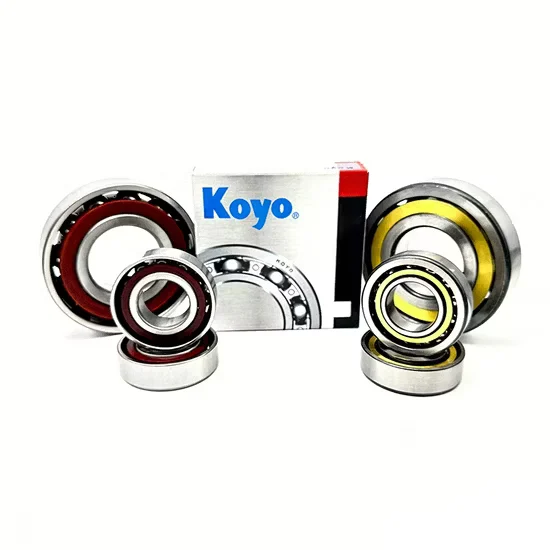
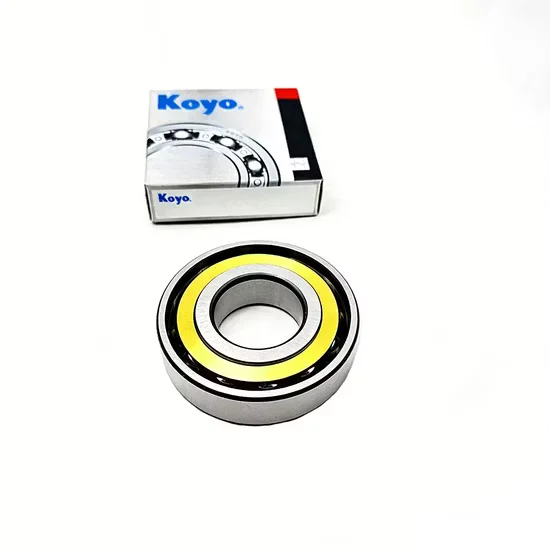
Spindles, the heart of any CNC machine, require bearings that can handle combined radial and axial loads at high speeds. Angular contact ball bearings are the standard choice here. They are designed to support axial loads in one direction and are often used in pairs (back-to-back or face-to-face) to handle bidirectional forces. For heavy-duty milling or turning centers, the preload adjustment of these bearings is critical for maintaining rigidity.
Feed axes, which move the cutting tool or workpiece, experience heavy radial loads but lower speeds. Cylindrical roller bearings are ideal for these applications due to their high radial load capacity and stiffness. They ensure smooth, precise movement without deflection, which is vital for maintaining dimensional accuracy in machined parts.
Gearboxes within the machine tool, which reduce motor speed to increase torque, typically use tapered roller bearings. These bearings can handle heavy combined loads and are robust enough for the harsh conditions inside a gearbox.
| Component | Primary Load Type | Recommended Bearing Type | Key Requirement |
|---|---|---|---|
| Spindle | Combined Radial/Axial, High Speed | Angular Contact Ball Bearing | High precision (P4/P2), low heat generation |
| Feed Axis | Heavy Radial, Low/Medium Speed | Cylindrical Roller Bearing | High rigidity, smooth motion, minimal deflection |
| Gearbox | Heavy Combined Load, Torque Transmission | Tapered Roller Bearing | Robustness, high load capacity, durability |
| Lead Screw | Axial Load, Precision Positioning | Thrust Ball Bearing | Low friction, high axial stiffness |
A European wind farm operator once consolidated their maintenance orders for various industrial equipment. By correctly specifying cylindrical roller bearings for their heavy gearboxes instead of generic deep groove balls, they extended the service life meaningfully. Similarly, for machine tools, matching the bearing type to the component’s function is non-negotiable. Sourcing Koyo precision bearings for machine tools involves more than just buying the brand; it requires selecting the right geometry for the job.
Consult technical datasheets or seek expert advice when unsure. Using the correct type ensures optimal performance and longevity for each part of your machine.
How to Source Genuine Koyo Bearings at Wholesale Prices?
Use global full-range suppliers for mixed-brand consolidation and flexible MOQ to reduce logistics costs.
Sourcing precision bearings directly from official brand channels can be costly and inflexible, especially for small to medium-sized enterprises. Minimum order quantities (MOQs) are often high, and lead times can be long. This is where specialized global full-range bearing suppliers add significant value. These distributors stock genuine products from multiple premium brands, including SKF, FAG, NSK, NTN, TIMKEN, and KOYO, allowing buyers to consolidate orders.
For regional distributors and MRO buyers, the ability to mix brands and sizes in a single container shipment is a game-changer. It reduces shipping costs per unit and simplifies inventory management. Instead of managing separate shipments from five different manufacturers, you receive one consolidated container with all the necessary parts. This flexibility is crucial for markets in the Middle East, Africa, and Latin America, where logistics efficiency directly impacts profitability.
Moreover, reputable global suppliers maintain massive spot inventories of standard and special part numbers. This means urgent spare parts can be shipped quickly, minimizing machine downtime. They also provide technical support, helping buyers select the right equivalent models if a specific part is obsolete or unavailable.
| Sourcing Channel | Pros | Cons | Best For |
|---|---|---|---|
| Official Brand Channel | Guaranteed authenticity, direct support | High MOQ, long lead times, rigid terms | Large OEMs with stable, high-volume needs |
| Local Distributor | Fast delivery, local support | Higher price, limited stock, risk of fakes | Emergency single-unit replacements |
| Global Full-Range Supplier | Mixed-brand consolidation, flexible MOQ, competitive pricing | Requires vetting for authenticity | Distributors, MRO buyers, SMEs |
A distributor in Central Asia recently streamlined their supply chain by partnering with a global supplier. They were able to order a mixed container of Koyo, NSK, and FAG bearings, tailored to the diverse needs of their local machine tool workshops. This approach reduced their overall lead time and provided them with competitive wholesale pricing compared to buying each brand separately. As a Koyo precision bearings for machine tools wholesale supplier, such partners offer a balanced solution of authenticity, flexibility, and cost-efficiency.
When evaluating suppliers, look for those who offer complete traceability, ISO-compliant quality assurance, and transparent communication. The right partner acts as an extension of your procurement team, ensuring you get the right parts at the right price.
Conclusion
Precision matters more than price when it comes to machine tool reliability.
Selecting the correct tolerance grade and verifying authenticity are the two most critical steps in purchasing spindle bearings. Counterfeits and wrong grades cause far more damage than the initial savings they promise. By working with reputable global suppliers who offer traceability and flexible sourcing options, buyers can secure genuine Koyo precision bearings for machine tools while optimizing their supply chain efficiency.