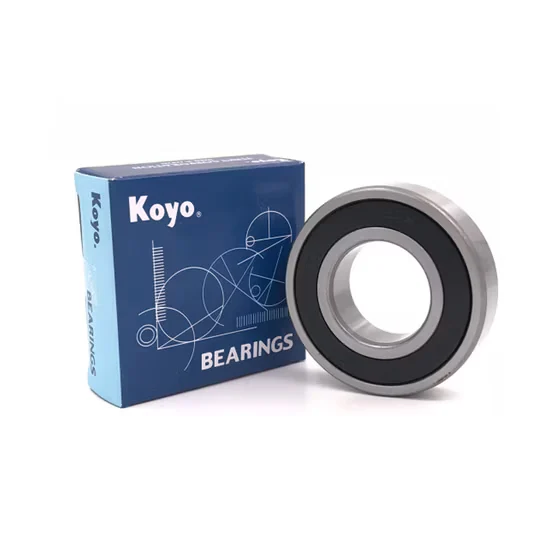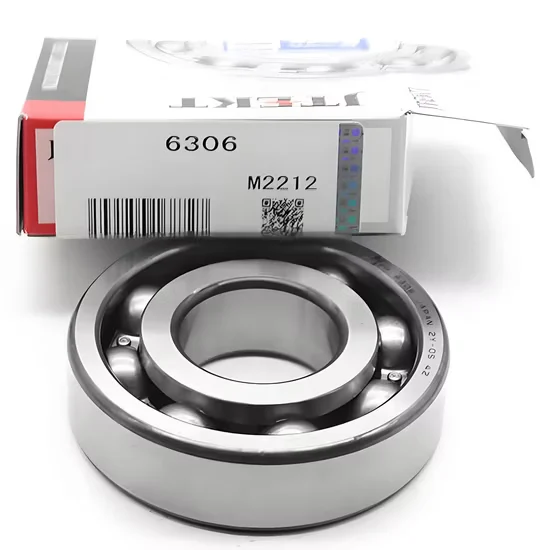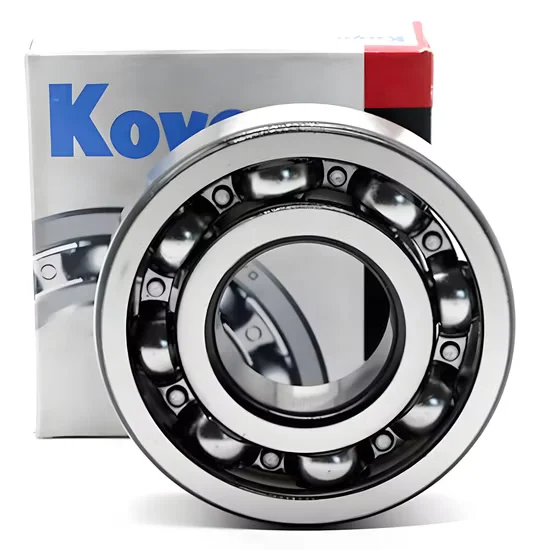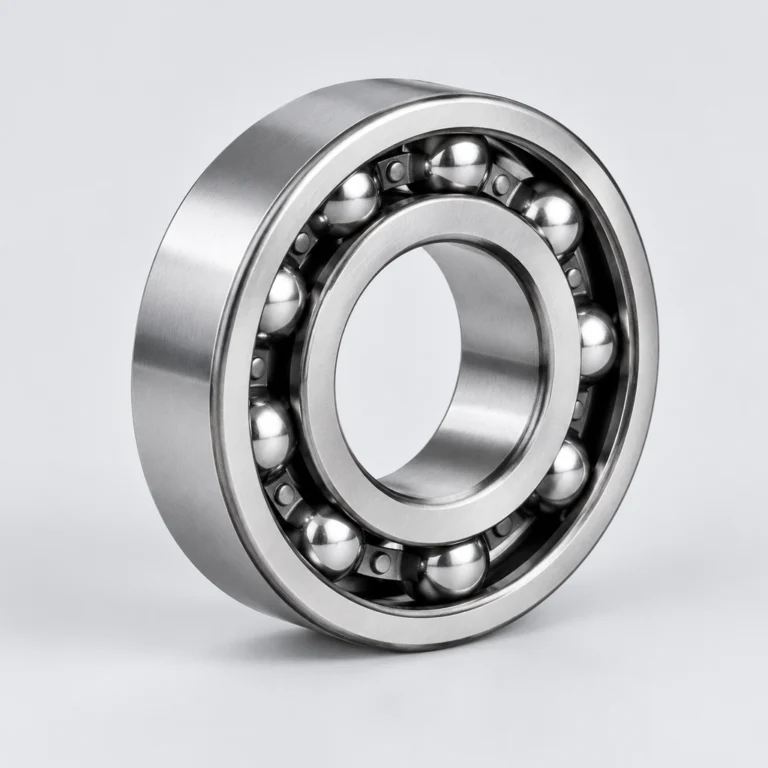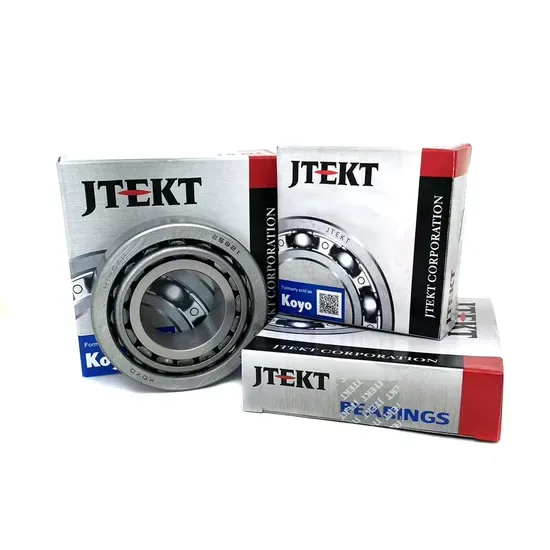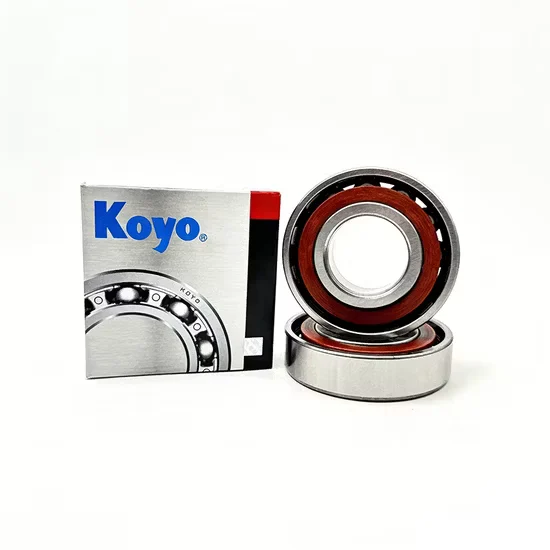
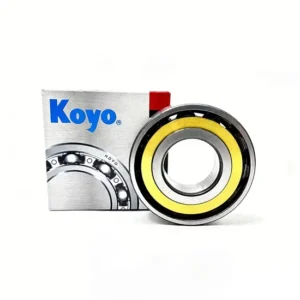
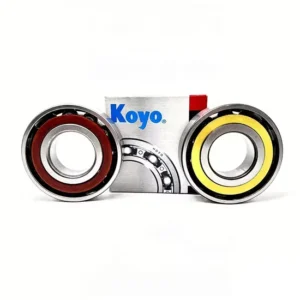
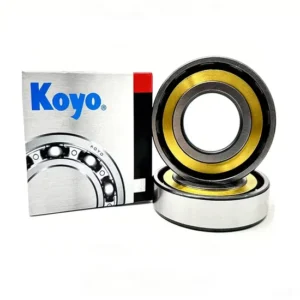
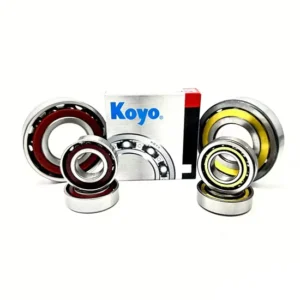
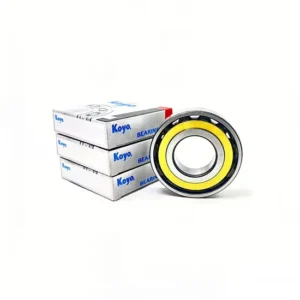
Traceable Japan Origins — Every Koyo 7000 angular contact ball bearing ships with verifiable batch documentation linking directly to the manufacturer's production facilities.
Technical Specifications
| Parameter | Value |
|---|---|
| Designation | Koyo 7000 |
| Bearing Type | Angular Contact Ball Bearing (Single Row) |
| Bore Diameter (d) | 10 mm |
| Outside Diameter (D) | 26 mm |
| Width (B) | 8 mm |
| Material | Bearing Steel |
| Seal or Shield Type | Open |
| Lubrication | Grease or Oil |
| Origin | Japan |
Application Suitability
| Industry | Typical Applications |
|---|---|
| Manufacturing | Machine tool spindles requiring high rotational accuracy |
| Fluid Handling | High-speed pumps handling continuous radial and axial loads |
| Automation | Robotics joints demanding low vibration and precise positioning |
| General Engineering | Precision equipment where minimal runout is critical |
Why Basic Model Numbers Cause Spindle Seizures in High-Speed Applications
Precision class and internal clearance dictate survival, not just the base designation.
In my years servicing manufacturing plants across Southeast Asia, I have seen too many woodworking machine spindles fail catastrophically. Procurement teams often source a standard P0 grade bearing to cut costs, only to face severe vibration and thermal seizure under high RPMs. Upgrading to a properly preloaded and precision-graded Koyo 7000 angular contact ball bearing resolves these issues, proving that ignoring internal geometry specifications leads to unplanned downtime.

Matching the Koyo 7000 Angular Contact Ball Bearing to Precision Demands
When outfitting machine tool spindles or high-speed pumps, the open seal design of this Koyo 7000 angular contact ball bearing allows for customized oil-air or oil-jet lubrication systems. This flexibility ensures optimal heat dissipation during continuous high-RPM operations. Our engineering team frequently assists clients in selecting the exact clearance and precision class to match their specific spindle housing tolerances.
Navigating Thermal Expansion and Lubrication in High-Speed Spindles
High-speed spindle applications generate substantial friction heat, which directly impacts internal clearance and lubricant viscosity. An open-type design enables continuous oil circulation, washing away wear particles while maintaining thermal stability. If the wrong clearance class is selected, thermal expansion can eliminate internal play, causing excessive preload and premature failure. Selecting the appropriate contact angle and cage material is equally critical to withstand the combined radial and axial loads typical in precision machinery.
Decoding the Base Designation and Precision Requirements
The base designation Koyo 7000 indicates a single-row angular contact ball bearing with a 10 mm bore, 26 mm outside diameter, and 8 mm width, constructed from standard bearing steel, with ceramic or stainless steel variants available for specialized environments. Because no specific suffix is present in this base identifier, procurement engineers must explicitly define the required precision class and internal clearance during the ordering process. The open seal configuration means the bearing arrives without factory-packed grease, requiring the end-user to implement a clean, controlled lubrication regimen during assembly. Understanding these baseline parameters prevents the costly mistake of installing a standard precision component into a high-accuracy spindle assembly.

The Hidden Financial Drain of Incorrect Precision Selection
Installing a standard tolerance bearing in a high-precision spindle results in excessive runout, poor surface finish on machined parts, and accelerated wear. According to ISO 15243 frameworks, improper internal clearance and inadequate precision are primary drivers of smearing and surface fatigue in high-speed applications. These failures rarely occur gradually; they typically culminate in sudden spindle seizure, voiding equipment warranties and triggering massive production delays.
Securing Authentic Precision Components for Critical Machinery
Sourcing genuine Japanese-manufactured components requires strict supply chain control, which we enforce through comprehensive batch traceability for every Koyo 7000 angular contact ball bearing we dispatch. Our technical team actively reviews your spindle specifications to verify that the requested precision class and clearance align with your operational demands, preventing the common mismatch seen in standard catalog orders. We maintain flexible minimum order quantities, allowing you to procure single replacement units for urgent maintenance or consolidate bulk shipments for large-scale machinery overhauls. Furthermore, our cross-reference consultation ensures that if a specific precision variant is unavailable, we identify dimensionally and dynamically equivalent alternatives from other premium global brands without compromising spindle integrity.
Documentation & Authenticity
- Certificate of Conformity verifying Japanese origin and manufacturing standards.
- Original factory batch tracking numbers linking to production dates.
- Official manufacturer app QR code authentication for field verification.
- Material inspection reports confirming bearing steel metallurgical properties.
- Dimensional and running accuracy inspection reports matching requested precision classes.
Storage, Handling & Mounting
- Store the open-type bearing in its original vapor-phase inhibitor packaging until the exact moment of spindle assembly to prevent surface corrosion.
- Wear lint-free cleanroom gloves during handling to avoid transferring skin acids onto the precision-ground bearing steel raceways.
- Use controlled induction heating for inner ring mounting, ensuring temperatures do not exceed the thermal limits of the bearing steel.
- Flush the spindle housing thoroughly before installation, as the open seal design offers no inherent protection against residual machining debris.
- Verify the specified preload arrangement and mounting orientation marks before pressing the bearing into the spindle housing.
Preparing Your Technical Parameters for Selection Review
To ensure the selected precision class and internal clearance perfectly match your application, please provide your spindle's operational speed, combined radial and axial load profiles, and target operating temperatures. Sharing the original OEM equipment model number allows our engineering team to cross-reference the exact factory specifications and verify dimensional tolerances. This technical data enables us to recommend the optimal lubrication strategy and confirm the L10 life expectancy for your specific machinery setup.
Frequently Asked Questions
Q: How can I verify the authenticity of the Koyo 7000 angular contact ball bearing upon delivery?
A: Every unit we supply includes original factory batch tracking documentation and a scannable QR code compatible with the official manufacturer authentication app. We also provide a Certificate of Conformity that traces the component back to its specific production run in Japan, ensuring complete supply chain transparency and protecting your machinery from counterfeit risks.
Q: What cross-reference considerations are critical when replacing this base designation?
A: When cross-referencing to equivalent models from other premium brands, you must align not only the basic 10x26x8 mm dimensions but also the exact precision class, internal clearance, and contact angle. A mismatch in any of these internal geometry parameters will alter the spindle's preload characteristics, leading to excessive heat generation or unacceptable vibration levels during high-speed operations.
Q: How should I choose between grease and oil lubrication for this open-type design?
A: For high-speed machine tool spindles, oil-air or oil-jet lubrication is generally preferred because it provides superior cooling and effectively flushes away wear particles. Grease is typically reserved for moderate-speed applications where continuous oil circulation systems are unavailable. Our technical team can calculate the optimal lubricant viscosity and replenishment intervals based on your specific spindle RPM and operating temperature.
Q: Which mounting practices are recommended for single row angular contact bearings in spindles?
A: Mounting requires strict adherence to the specified preload arrangement, typically in a back-to-back or face-to-face configuration depending on the spindle design. You must use precision-ground spacer rings to maintain exact axial positioning and employ controlled induction heating for the inner ring. Never apply mounting forces through the rolling elements, as this will instantly compromise the precision raceway finish.