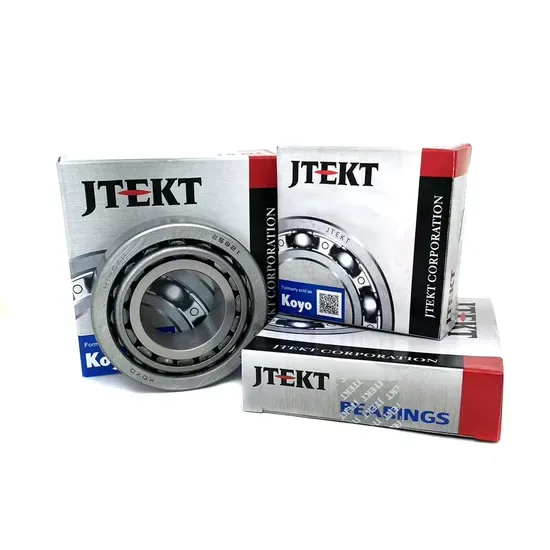
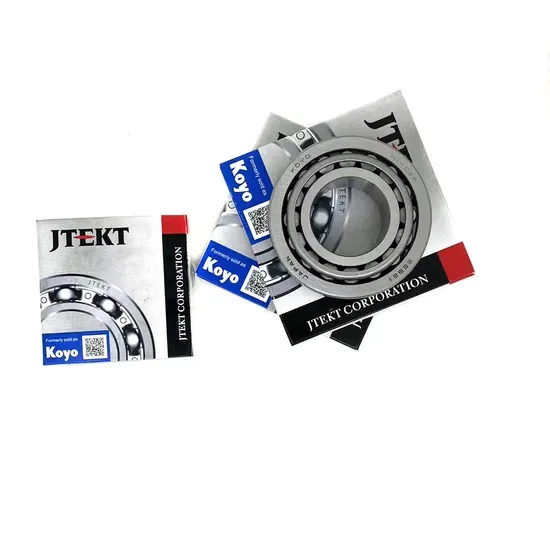
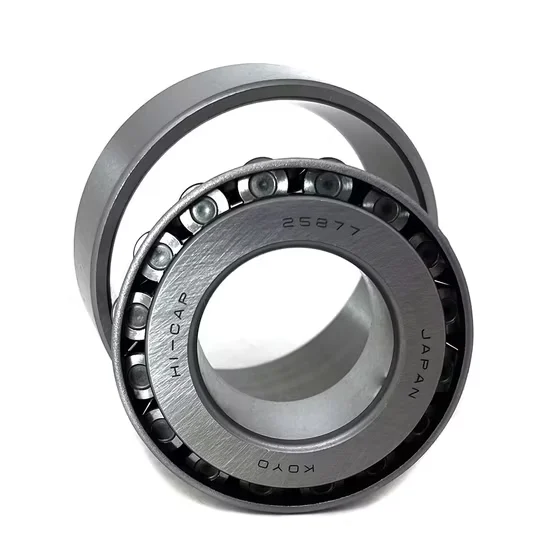
Buying the cheapest bearing for a rolling mill is the most expensive mistake you can make.
Selecting genuine Koyo bearings in rolling mills requires strict load parameter analysis rather than simple price comparison to prevent catastrophic failures in extreme operating conditions. The core decision must balance dynamic load ratings against peak shock loads, ensuring that internal clearance and thermal expansion tolerances match the specific mill stand requirements.
I still remember the smell of burnt oil and overheated steel in a finishing mill line in the Middle East. The maintenance team had substituted standard tapered roller bearings to cut costs, ignoring the specific shock load vectors of the final stands. Within weeks, the bearings seized under high temperature and heavy load, causing a complete line shutdown. The downtime lasted days, and the replacement cost ratio was negligible compared to the lost production revenue. That incident shifted my focus from unit price to application-specific engineering. Now, when sourcing Koyo bearings in rolling mills, I look at the metallurgical context first.
This experience highlights why generic solutions fail in specialized environments. Rolling mills are not just heavy machinery; they are extreme environments where heat, shock, and contamination converge. Understanding these dynamics is essential for any procurement strategy involving Koyo bearings in rolling mills.
Why Standard Bearings Fail in Rolling Mills?
Extreme heat and shock loads require specialized heavy-duty designs, not generic alternatives.
Many buyers assume that standard industrial bearings can withstand the rigors of rough mill stands. This is a dangerous misconception. The dynamic load ratings must match peak shock loads, not just average rolling forces. In a hot strip mill, the temperature fluctuations cause significant thermal expansion, which can eliminate internal clearance if not properly selected.
When a standard bearing is forced into a high-shock environment, the raceways deform, and the rolling elements skid rather than roll. This generates excessive heat, leading to lubricant breakdown and eventual seizure. The failure is rarely gradual; it is often sudden and destructive, damaging the housing and shaft along with the bearing itself.
| Failure Factor | Standard Industrial Bearing | Heavy-Duty Mill Bearing |
|---|---|---|
| Load Capacity | Rated for steady loads | Rated for peak shock loads |
| Internal Clearance | Standard C3 | Customized for thermal expansion |
| Cage Material | Standard steel | Reinforced brass or steel |
| Sealing | Basic lip seals | Robust labyrinth or contact seals |
| Lubrication | General purpose grease | High-temperature extreme pressure |
The table above illustrates the qualitative differences in design philosophy. A standard bearing might have adequate static load capacity, but its dynamic rating fails under the impact of slab entry. For Koyo bearings in rolling mills, the selection process involves verifying that the cage design can withstand centrifugal forces and shock without fracturing.
The key takeaway is that the initial savings from using a standard bearing are erased by the secondary damage caused during failure. Procurement teams must prioritize specifications that account for the worst-case scenario, not the average operating condition.
How to Select the Right Koyo Bearing for Each Mill Stand?
Match spherical rollers for continuous casters and tapered rollers for finishing mills based on precise load vectors.
Selection is not a one-size-fits-all process. Different mill stands impose different stress profiles. Continuous casters operate under heavy radial loads with moderate speeds, making spherical roller bearings the ideal choice due to their self-aligning capability. Finishing mills, on the other hand, require precise axial and radial load handling, where tapered roller bearings excel.
For continuous casters, the primary concern is misalignment caused by structural deflection. Spherical roller bearings accommodate this misalignment without inducing additional stress. When selecting Koyo bearings in rolling mills for these applications, focus on the load capacity multiplier and service life extension potential. Upgrading to higher-capacity spherical rollers can significantly reduce the frequency of replacements.
In finishing mills, the precision of the rolled product depends on the rigidity of the bearing arrangement. Tapered roller bearings provide this rigidity but are sensitive to mounting errors. Proper preload adjustment is critical. If the preload is too high, overheating occurs; if too low, vibration increases. Technical datasheets from the manufacturer provide the necessary guidance for setting these parameters.
A regional distributor once consolidated an urgent order for a steel plant that had mixed up its spare parts inventory. By analyzing the load vectors for each stand, we identified that the finishing mill required specific tapered units with precise internal clearance, while the rougher stands could use robust spherical rollers. This targeted approach reduced lead time and ensured that each bearing was fit for its specific purpose. For Koyo bearings in rolling mills, matching the type to the stand function is non-negotiable.
What Are the Hidden Costs of Incorrect Bearing Selection?
Unplanned downtime and secondary damage far exceed the initial savings of cheap substitutes.
Buyers often focus on the unit price, believing that lower costs improve margins. However, bearing failure in a hot strip mill costs exponentially more in lost production than the premium for correct specifications. The hidden costs include emergency shipping fees, overtime labor for installation, and the loss of customer trust due to delayed deliveries.
Consider the scenario of a mid-six-figure loss caused by a single bearing failure. The cost of the bearing itself is a fraction of the total impact. When a bearing fails catastrophically, it can damage the roll neck, the housing, and even the drive system. Repairing these components takes time and resources that were not budgeted.
Furthermore, incorrect selection leads to frequent premature failures, creating a cycle of reactive maintenance. This prevents the implementation of predictive maintenance strategies, which rely on stable baseline performance. By investing in the right Koyo bearings in rolling mills, plants can transition from fire-fighting to planned outages, optimizing their maintenance schedules.
The financial argument for quality is clear. While the upfront cost may be higher, the total cost of ownership is significantly lower. This perspective is crucial for MRO managers who are evaluated on overall plant efficiency rather than just spare parts spending. For Koyo bearings in rolling mills, the value lies in reliability and longevity.
How to Ensure Authentic Koyo Bearings for Your Steel Mill?
Demand traceability, ISO compliance, and technical selection support from global suppliers.
Counterfeit bearings are a persistent threat in the global market. These inferior products often look identical to genuine ones but lack the material quality and precision engineering required for heavy-duty applications. Using counterfeit bearings in a rolling mill is a recipe for disaster. Ensuring authenticity requires a rigorous sourcing strategy.
First, demand full traceability documentation. Genuine products come with certificates of conformity and batch numbers that can be verified with the manufacturer. Second, ensure that the supplier adheres to ISO standards for quality management. This provides an additional layer of assurance regarding the handling and storage of the bearings.
Technical support is another critical factor. A reliable supplier does not just ship boxes; they provide engineering assistance. This includes help with model selection, interpretation of technical datasheets, and failure analysis. When issues arise, having access to experts who understand the application can save valuable time.
We support our clients by offering mixed-batch consolidation for urgent spare parts, reducing lead times and shipping costs. Our inventory includes genuine products with complete documentation, ensuring that every Koyo bearings in rolling mills order meets the highest standards of authenticity and performance. This approach helps distributors and end-users mitigate the risk of counterfeits while maintaining efficient supply chains.
Conclusion
Reliability in rolling mills starts with precise bearing selection.
Choosing the right components involves understanding the specific load and thermal conditions of each mill stand. Prioritizing technical specifications over unit price prevents costly failures and ensures continuous production. Sourcing genuine Koyo bearings in rolling mills from trusted suppliers with technical expertise is the foundation of a resilient maintenance strategy.