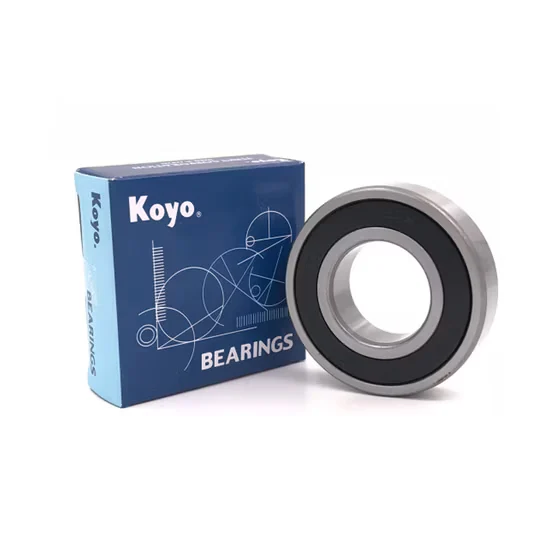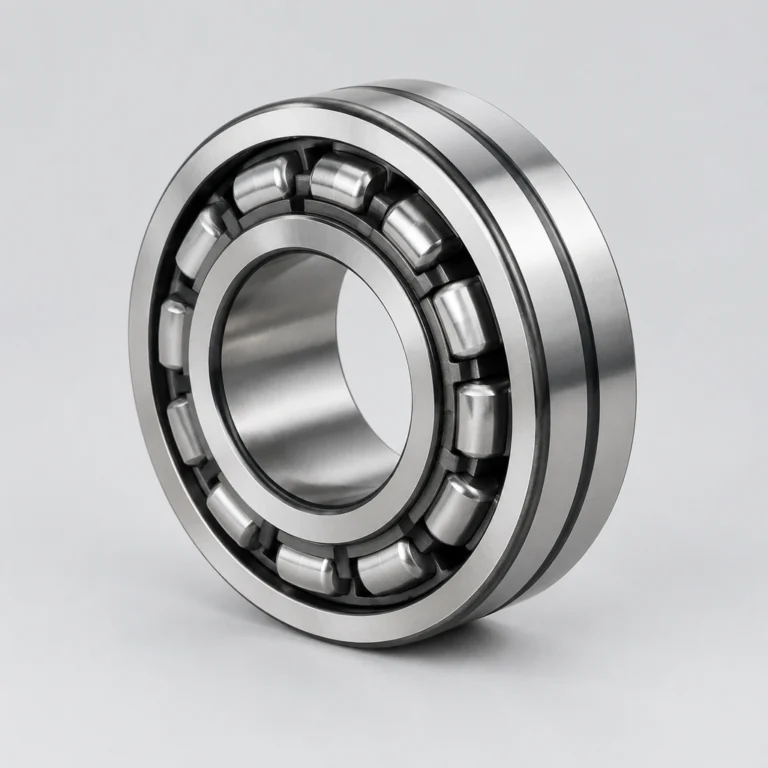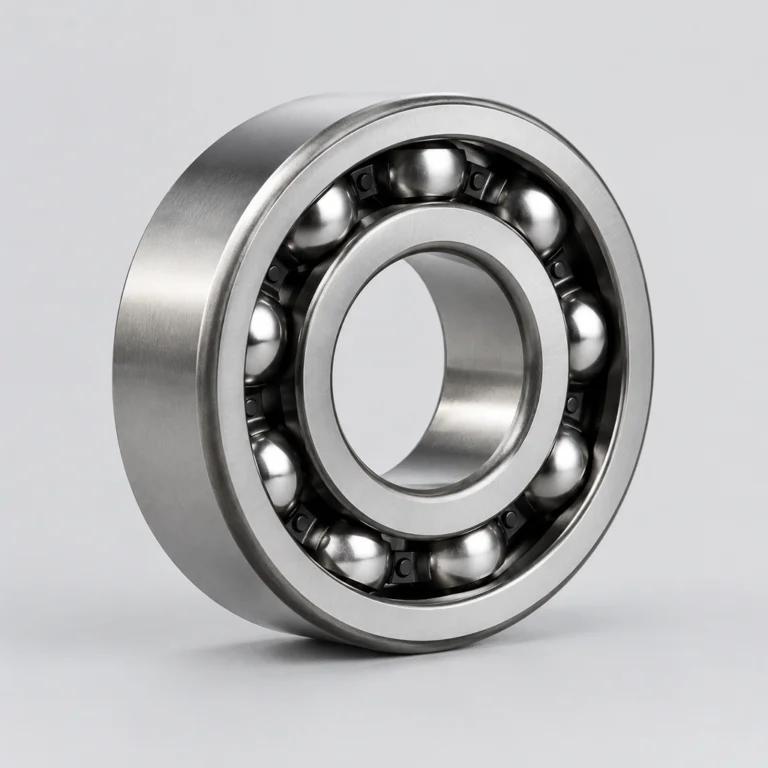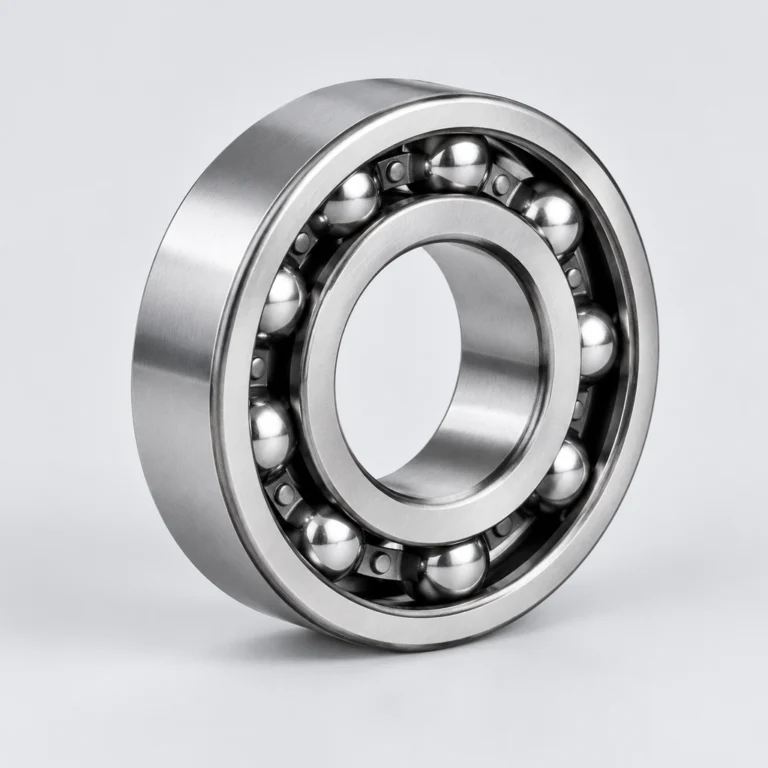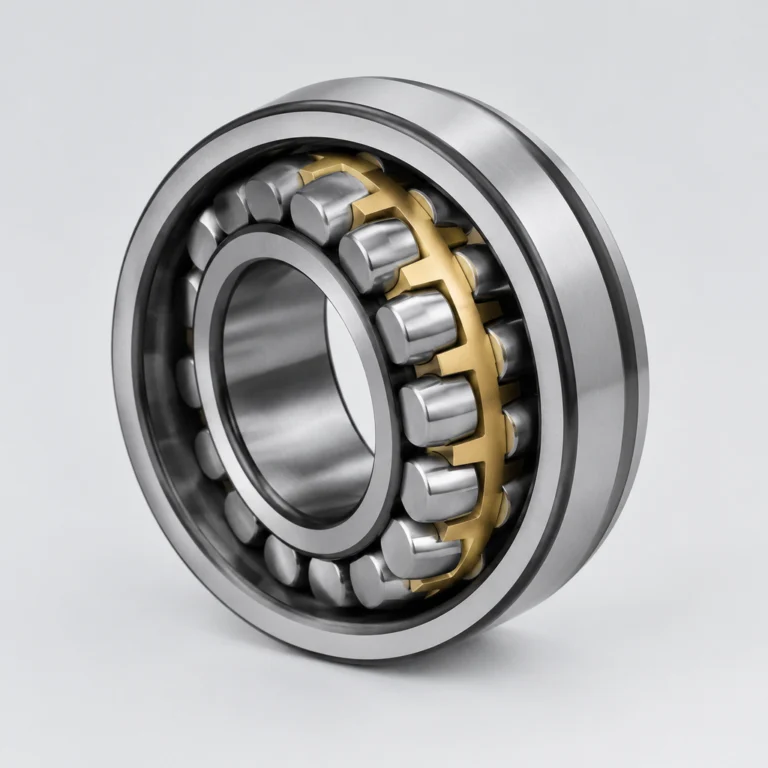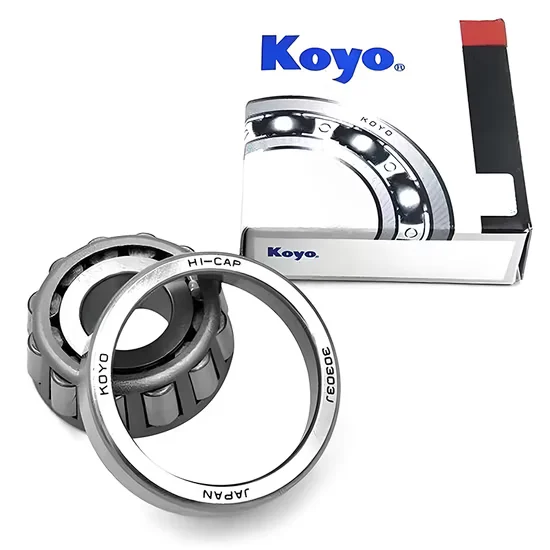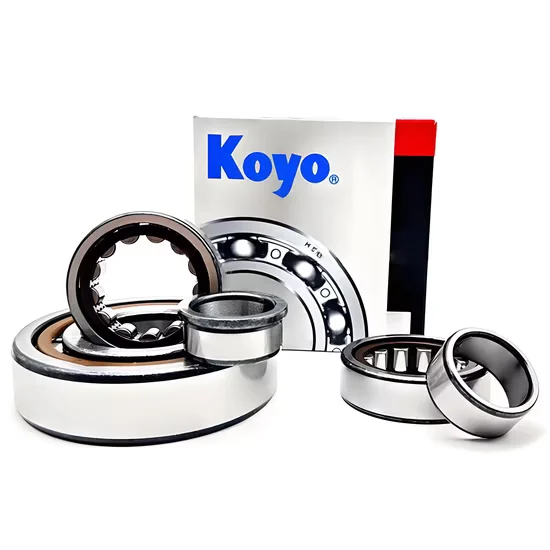
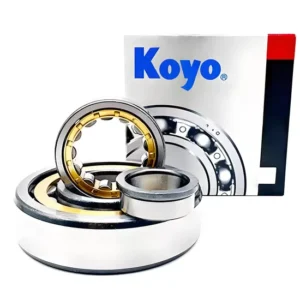
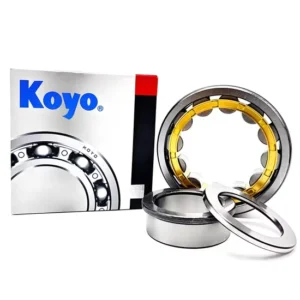


Mixed-Brand Sourcing — Consolidate KOYO NU214EM orders with other premium lines in a single shipment without juggling multiple vendors.
Technical Specifications
| Parameter | Value |
|---|---|
| Designation | KOYO NU214EM |
| Bearing Type | Cylindrical Roller Bearing |
| Bore Diameter (d) | 70 mm |
| Outside Diameter (D) | 125 mm |
| Width (B) | 24 mm |
| Cage Material | Machined Brass |
| Seal or Shield Type | Open |
| Number of Rows | Single Row |
| Load Direction | Radial |
| Separable | Yes |
| Origin | Japan |
Application Suitability
| Industry | Typical Applications |
|---|---|
| Heavy Machinery | Heavy-duty gearboxes |
| Rail & Transit | Traction motors |
| Metals Processing | Rolling mills |
Why Cage Material Dictates the Survival of a KOYO NU214EM cylindrical roller bearing
Brass cages are not an optional upgrade; they are the only viable choice for high-vibration radial loads.
Years ago, I sourced bearings for a mining screen in Riyadh and swapped the machined brass cage for a pressed steel alternative to cut costs. The extreme heat and heavy shock loads shattered the steel cage, locking up the entire machine and halting production for days. That failure proved that substituting cage materials in critical applications invites catastrophic downtime and massive financial losses. When dealing with heavy-duty gearboxes, the internal components must withstand relentless mechanical abuse without deforming.
Matching the Component to Extreme Radial Demands
When specifying a KOYO NU214EM cylindrical roller bearing for heavy-duty gearboxes, the primary concern is managing immense radial forces without compromising rotational stability. Our supply chain ensures that every unit delivered features the exact enhanced capacity design required for these demanding environments. We cross-verify the internal geometry and cage specifications against official catalogs to guarantee the component matches the operational profile of rolling mills and traction motors. Procurement engineers must recognize that slight deviations in internal clearance or cage material can drastically alter the operational lifespan of the equipment.
Navigating Thermal and Lubrication Challenges
Open-type cylindrical roller bearings rely heavily on external lubrication systems, making the choice between oil and grease critical for thermal management. In rolling mills, continuous operation generates significant friction heat, requiring oil circulation to carry away thermal energy and prevent cage degradation. Furthermore, the absence of integrated seals means the housing must provide adequate contamination barriers to protect the rolling elements from abrasive metallic dust. Maintenance teams must establish strict re-lubrication intervals to flush out wear particles and maintain a protective hydrodynamic film across the raceways.
Decoding the E and M Suffixes for Load Capacity
The "E" suffix denotes an enhanced internal design, optimizing the roller profile and flange contacts to handle substantially higher radial loads than standard configurations. Meanwhile, the "M" suffix specifies a machined brass cage, which provides superior structural integrity under heavy vibrations and shock loads compared to pressed steel or polyamide alternatives. This specific combination ensures the bearing maintains precise roller guidance and resists deformation even when subjected to the severe mechanical stresses typical in traction motors. Understanding these suffixes is crucial for avoiding mismatched replacements that fail under peak operational loads.
The Hidden Financial Drain of Substandard Replacements
Procuring unverified replacements often leads to premature fatigue and spalling, triggering unplanned downtime that far exceeds the initial savings on the component. When a cage fractures due to inadequate material strength, it can cause secondary damage to the shaft and housing, resulting in catastrophic equipment failure. Adhering to strict quality frameworks prevents these cascading mechanical breakdowns and protects the overall reliability of the production line. Replacing a single failed bearing in a continuous rolling mill can cost thousands in lost output.
Securing Authentic Components Through Verified Channels
Sourcing genuine parts requires more than just matching the part number; it demands rigorous verification of the cage material and internal clearances, which are frequently counterfeited. We maintain complete batch traceability for every KOYO NU214EM cylindrical roller bearing, ensuring the machined brass cage meets the original manufacturer's metallurgical standards. Our technical team provides cross-reference consultations and authentic documentation, eliminating the risk of receiving substandard parts that compromise heavy-duty gearbox performance. We focus on delivering verifiable quality rather than competing on suspiciously low prices.
Documentation & Authenticity
- Original certificate of conformity verifying Japanese manufacturing origin.
- Batch traceability records linking the specific machined brass cage to the production run.
- Dimensional inspection reports confirming 70 mm bore and 125 mm outside diameter tolerances.
- Metallurgical verification ensuring the enhanced capacity roller profile meets design specifications.
Storage, Handling & Mounting
- Store the open-type bearing in its original moisture-barrier packaging until immediately before installation to prevent raceway corrosion.
- Use induction heating for the inner ring mounting, ensuring the temperature does not exceed the thermal limit of the machined brass cage.
- Apply clean gloves during handling to prevent skin acids from degrading the bearing steel surfaces prior to lubrication.
- Verify the separable inner and outer ring components are matched correctly before pressing them into the heavy-duty gearbox housing.
Engineering Support for Precise Selection
To ensure optimal performance in your specific application, provide our engineering team with detailed operational parameters, including exact radial loads, rotational speeds, and operating temperatures. Sharing the OEM equipment model number allows us to perform a comprehensive cross-reference check and validate the L10 life calculation. This technical review guarantees that the selected configuration perfectly aligns with your machinery's mechanical and thermal requirements.
Frequently Asked Questions
Q: How can I verify the authenticity of the machined brass cage upon receipt?
A: Authentic machined brass cages exhibit a specific weight, precise machining marks, and a distinct golden hue that differs significantly from pressed steel or counterfeit alloys. We provide original batch traceability documentation and material inspection reports with every shipment, allowing your maintenance team to cross-check the physical characteristics against the manufacturer's official specifications before installation.
Q: What cross-reference equivalents exist for this specific configuration?
A: While this exact configuration is highly specific, equivalent models from other premium global brands often share the same 70 mm bore, 125 mm outside diameter, and 24 mm width. Our technical team can provide precise cross-reference mappings to alternative premium lines, ensuring you have viable backup options for urgent MRO requirements without compromising the enhanced capacity and machined cage specifications.
Q: Why choose a machined brass cage over pressed steel for this application?
A: Machined brass offers superior durability and vibration resistance, which is critical for heavy-duty gearboxes and rolling mills where shock loads are common. Unlike pressed steel, which can fracture under extreme thermal and mechanical stress, brass maintains its structural integrity, ensuring reliable roller guidance and preventing catastrophic machine lockups during continuous high-load operations.
Q: How does the enhanced capacity design affect the dynamic load rating?
A: The enhanced internal geometry optimizes the contact area between the rollers and the raceways, allowing the bearing to accommodate noticeably higher radial forces. This design modification significantly extends the fatigue life under heavy loads, making it the preferred choice for demanding industrial environments where standard capacity bearings would experience premature spalling and failure.