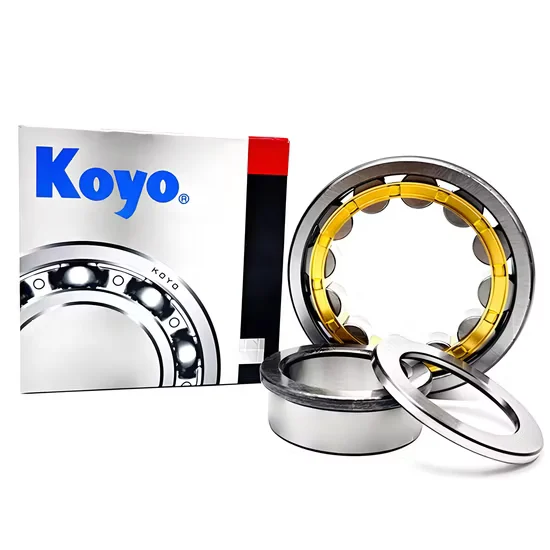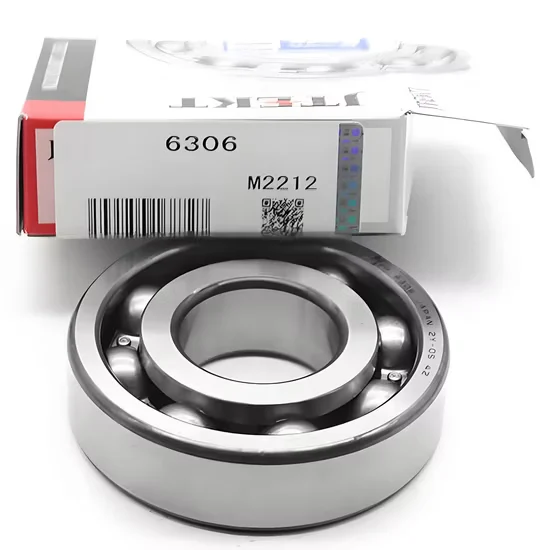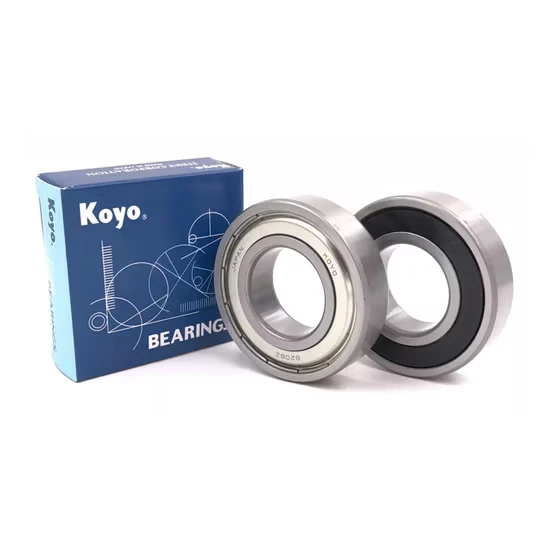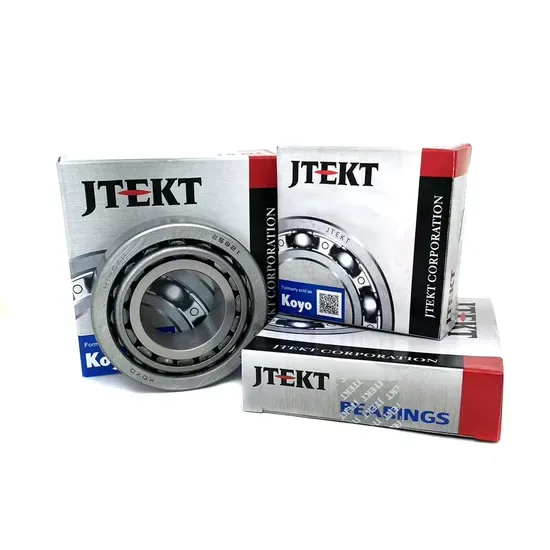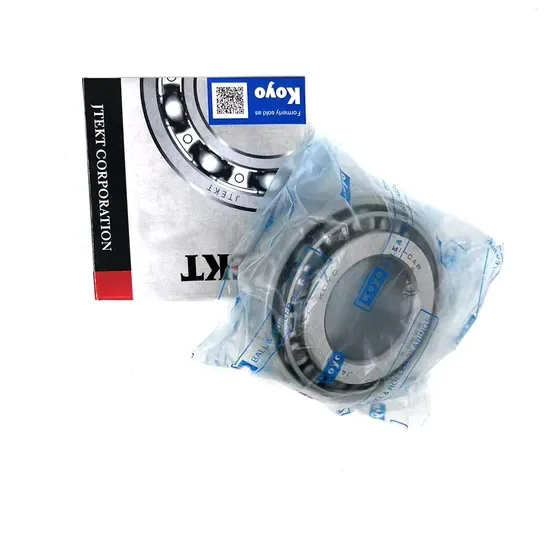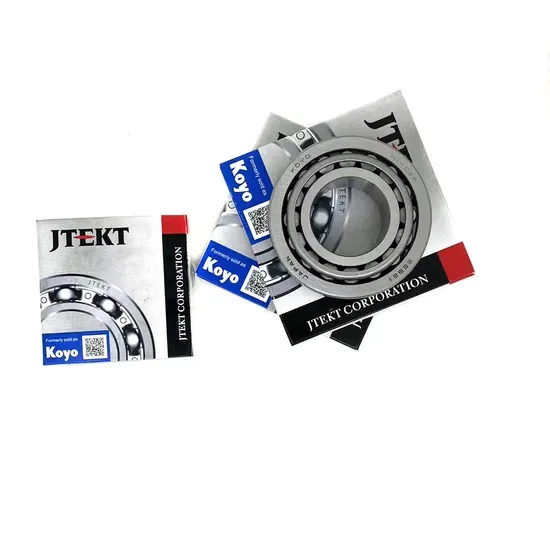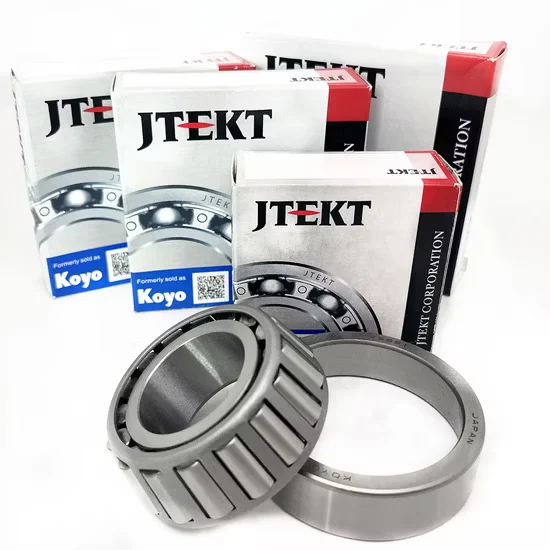
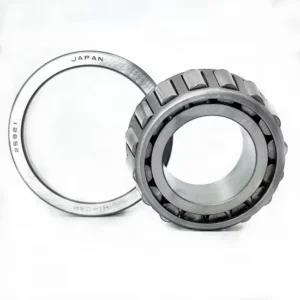
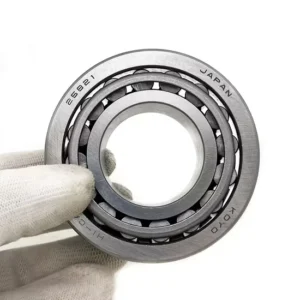
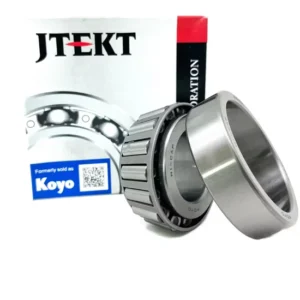
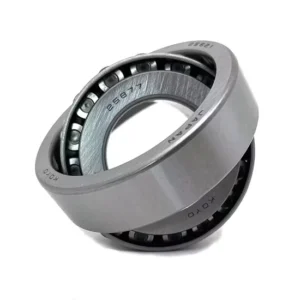
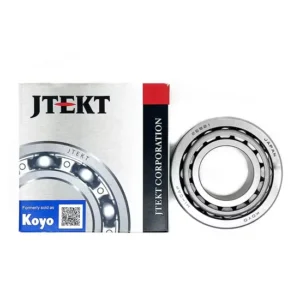
Original Batch Traceability — Every Koyo 30218 30219 30220 30222 30303 tapered roller bearing shipped includes verifiable factory lot documentation to ensure authentic metallurgical consistency.
Technical Specifications
| Parameter | Value |
|---|---|
| Designation | 30218 30219 30220 30222 30303 |
| Bearing Type | Tapered Roller Bearing |
| The Number of Rows | Single, Double, Four |
| Material | Bearing Steel |
| Precision Rating | P0, P6, P5, P4, P2 |
| Load Direction | Radial Bearing |
| Origin | China |
Application Suitability
| Industry | Typical Applications |
|---|---|
| Power Transmission | Speed reducer input and output shafts, industrial gearbox pinion supports |
| Automotive & Heavy Transport | Truck axle wheel hubs, heavy-duty differential carriers |
| Marine Engineering | Marine drive propulsion shafts, stern tube radial supports |
Why Reducer Overheating Often Traces Back to Ignored Clearance in the Koyo 30218 30219 30220 30222 30303 tapered roller bearing
Matching the exact internal clearance to the reducer's thermal expansion prevents catastrophic cage deformation.
During a trade show in Hannover, a client replaced a worn unit with a basic 30220 model, entirely ignoring the specific clearance suffix required for their heavy-duty gearbox. The assembly seized under high temperatures within just a few days of operation. Teardown analysis later revealed the cage had severely deformed due to thermal expansion squeezing the rolling elements against the raceways. Sourcing the correct Koyo 30218 30219 30220 30222 30303 tapered roller bearing requires looking far beyond the base numbers to match the exact operational thermal profile and housing tolerances of the specific speed reducer.
Aligning Tapered Geometry with Reducer Radial Loads
Speed reducers continuously generate substantial radial forces that demand the specialized load-distributing geometry of a tapered design. When specifying a Koyo 30218 30219 30220 30222 30303 tapered roller bearing for these complex gearboxes, our engineering team carefully cross-references your housing tolerances and shaft deflection limits to recommend the optimal row configuration. This detailed evaluation ensures the selected single, double, or four-row setup handles the specific radial vectors without inducing premature edge loading on the roller ends. Proper geometric alignment directly translates to extended service intervals and reliable power transmission.
Thermal and Lubrication Realities Inside the Gearbox Housing
Inside an enclosed speed reducer, combined radial loads and high rotational speeds generate significant friction heat at the contact zones. This continuous thermal buildup directly impacts internal clearance, making the initial selection of the correct clearance class absolutely critical to avoid zero-clearance seizure during peak operations. Proper oil bath or splash lubrication must reliably reach the roller-cage interface to dissipate heat effectively and flush away microscopic wear debris. Furthermore, precise mounting adjustments are required to set the operating clearance, as any axial misalignment exacerbates localized stress on the bearing steel raceways and accelerates fatigue.
Decoding Precision and Row Configurations for Gear Drives
The available precision ratings from P0 up to P2 dictate the running accuracy and vibration levels within high-speed reducer shafts. While standard P0 precision suffices for general industrial gearboxes operating at moderate speeds, critical applications demand P4 or P2 ratings to minimize shaft runout, reduce acoustic noise, and maintain tight gear meshing tolerances. Components are available in bearing steel variants, providing the necessary core hardness and fatigue resistance for continuous heavy radial loading under demanding industrial conditions. Depending on the specific reducer design constraints, single-row setups handle standard radial loads efficiently, while double or four-row configurations are strategically deployed when the application requires enhanced structural rigidity and substantially higher radial capacity. Understanding these intricate variations ensures the selected components perform reliably under the exact mechanical and thermal constraints of your equipment.
The Cascading Impact of Mismatched Reducer Bearings
Selecting an incorrect clearance class or inappropriate precision grade inevitably leads to unplanned downtime and catastrophic damage to the entire gearbox assembly. According to established failure classification frameworks like ISO 15243, improper internal geometry matching frequently results in severe smearing, cage fracture, and extensive raceway spalling. This premature mechanical failure not only voids expensive equipment warranties but also forces emergency procurement at premium costs while production remains halted. Ultimately, the hidden financial and operational expenses of a misapplied component far exceed the initial investment in correctly specified, fully traceable inventory.
Securing Authentic Traceability for Critical Gearbox Maintenance
We maintain massive spot inventory covering these exact reducer models, allowing us to fulfill urgent maintenance requirements without enduring typical multi-week lead times. Every single unit is supplied with complete traceability documentation, entirely eliminating the risk of counterfeit parts that frequently plague the industrial aftermarket. Our dedicated technical selection support helps you cross-reference equivalent models and verify the correct clearance suffix before final dispatch. We offer highly flexible consolidation shipping, meaning you can easily mix these tapered units with other critical MRO spares in a single container. Furthermore, our long-term after-sales engineering team provides in-depth failure analysis guidance if your reducer operating conditions or load profiles change over time.
Documentation & Authenticity
- Certificate of Conformity verifying genuine Koyo or premium brand origin for all shipped reducer bearings.
- Original factory batch traceability records linking the specific 30220 or 30303 unit to its production lot.
- Dimensional and running accuracy inspection reports confirming P4 or P2 tolerances prior to dispatch.
- Material test certificates validating the bearing steel metallurgical composition for heavy radial load capacity.
Storage, Handling & Mounting
- Store the single-row units in original packaging to prevent humidity ingress that could compromise the bearing steel raceways.
- Use induction heating for mounting inner rings on reducer shafts, avoiding direct flame that alters precision ratings.
- Keep double and four-row matched sets sealed until installation to preserve factory-set spacing and load distribution.
- Apply clean lint-free gloves when handling P2 precision variants to prevent skin acids from etching the polished surfaces.
Engineering Data Required for Accurate Reducer Selection
To ensure optimal life calculation and correct clearance matching, please share your reducer's exact radial loads, operating speeds, and anticipated thermal profiles. Providing the original OEM equipment number or detailed housing drawings allows our technical team to perform precise cross-reference verification and dimensional checks. Specify any extreme environmental factors or unusual lubrication constraints so we can definitively confirm the suitability of the standard bearing steel construction for your specific application requirements.
Frequently Asked Questions
Q: How do I choose the right precision rating for my speed reducer application?
A: Standard industrial gearboxes typically perform well with P0 or P6 precision, offering a cost-effective solution for general radial loads. However, high-speed or low-vibration applications require P4 or P2 ratings to minimize shaft runout and ensure smooth operation. Our engineering team can review your specific speed and tolerance requirements to recommend the optimal class.
Q: What are the cross-reference equivalents for these specific tapered models?
A: While we specialize in genuine Koyo and premium domestic lines, we frequently cross-reference these models to SKF, FAG, and NSK equivalents for global MRO projects. If you have an existing OEM part number or a competitor's designation, our technical team will verify the dimensional and load compatibility to ensure a direct, safe replacement for your reducer.
Q: How can I verify the authenticity of the supplied bearings?
A: Every unit we ship includes verifiable factory lot documentation and a Certificate of Conformity. We provide original batch traceability records that link the specific bearing to its production run. Buyers can also utilize official brand verification apps or QR codes where applicable, ensuring complete confidence in the metallurgical integrity of the replacement parts.
Q: Single versus double or four-row configurations: which fits my radial load needs?
A: Single-row designs handle standard radial forces in typical reducer shafts. When your gearbox experiences exceptionally high radial loads or requires greater shaft rigidity, double or four-row configurations distribute the stress across more rolling elements. Share your exact load vectors and housing dimensions, and we will specify the correct row arrangement for your machinery.