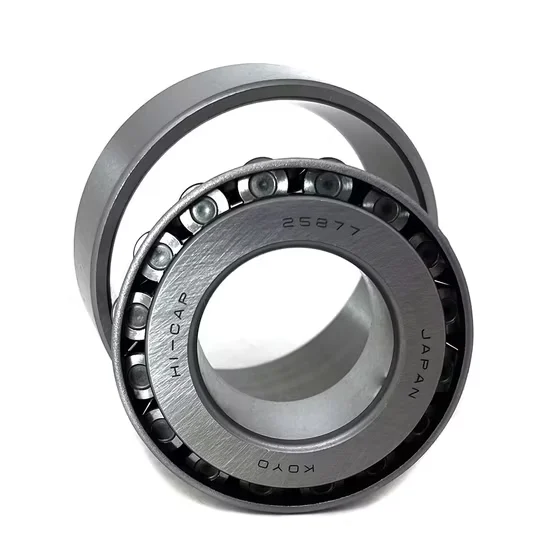
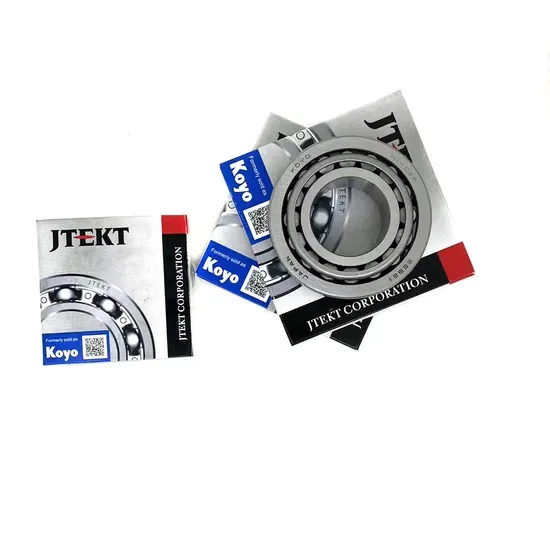
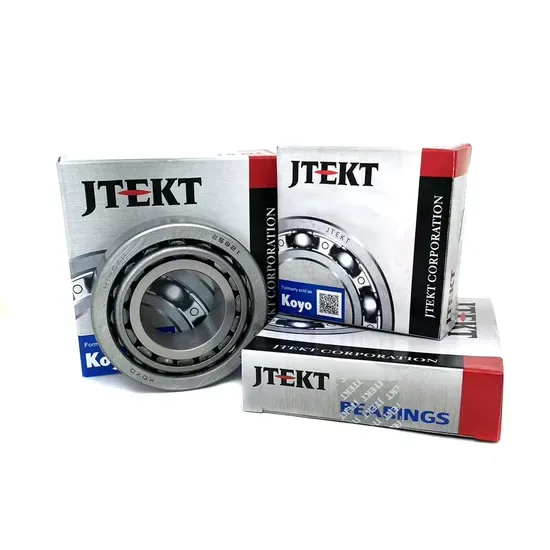
Most bearing failures in crushers are not caused by manufacturing defects, but by invisible damage sustained during mixed-load shipping.
The core reason Koyo bearings in crushers fail prematurely is rarely the steel quality or design limits. It is the combination of incorrect internal clearance selection for high-temperature environments and physical shock from improper logistics packing. To ensure reliability, operators must calculate thermal expansion compensation using C3 or C4 clearance standards and enforce absolute physical isolation between heavy crusher components and precision bearing units during transit.
I still remember the silence at a quarry site in Nigeria. It was not the quiet of efficiency, but the deafening stoppage of a primary jaw crusher. The cause was not a faulty batch of Koyo bearings in crushers, but a shattered wooden crate. During ocean freight, heavy cast-iron cheek plates had shifted and crushed the bearing cartons stacked beneath them. The inner rings suffered micro-dents that were invisible to the naked eye but catastrophic under load. That incident shifted my focus from simple trading to rigorous technical validation and logistics engineering. Today, when I handle bulk orders for mining clients, I treat the packing list with the same scrutiny as the dimensional tolerance sheet.
How to Calculate Clearance for High-Temp Jaw Crushers?
Standard internal clearance is insufficient for crusher applications because thermal expansion significantly reduces the operational gap between rolling elements and raceways.
In a typical jaw crusher, the main shaft operates under extreme radial loads and generates substantial heat due to friction and crushing forces. If a standard C2 or normal clearance bearing is installed, the inner ring expands faster than the outer ring as temperatures rise. This thermal growth eliminates the internal play, leading to preload conditions that cause rapid overheating and seizure.
To prevent this, the selection process must account for the operating temperature differential. For most mining crusher applications, especially those involving continuous duty cycles in hot climates, C3 clearance is the minimum requirement. In more severe cases, such as large gyratory crushers or environments with poor ventilation, C4 clearance becomes necessary. The decision relies on calculating the expected temperature rise of the inner ring relative to the housing.
| Operating Condition | Recommended Clearance Class | Thermal Compensation Need | Misalignment Tolerance |
|---|---|---|---|
| Light Load, Low Speed | Normal (C0) | Minimal | Low |
| Moderate Load, Standard Temp | C3 | Standard | Moderate |
| Heavy Load, High Temp | C4 | High | High |
| Severe Shock, Extreme Heat | C4 + Special Heat Treatment | Critical | Very High |
When sourcing Koyo bearings in crushers, distributors must verify that the supplied units match the specified clearance class. A common error is substituting a standard clearance unit when the specific C3 variant is out of stock. This substitution might save time initially but guarantees premature failure. The correct approach involves consulting the manufacturer’s technical data to confirm the residual clearance after mounting, ensuring it remains positive even at peak operating temperatures.
What Causes Hidden Damage During Global Shipping?
Co-loading heavy structural parts with precision bearing packages creates a high-risk environment for microscopic impact damage that compromises bearing integrity before installation.
The journey from the warehouse to the mine site is often where the lifespan of Koyo bearings in crushers is secretly reduced. In an effort to optimize container space, shippers frequently mix heavy crusher components like flywheels, eccentric shafts, and toggle plates with boxes of bearings. While this seems efficient, the physics of maritime transport tell a different story. Containers experience constant vibration, stacking pressure, and occasional rough handling.
Without rigid separation, the heavy metal parts act as hammers. Even if the outer cardboard box of the bearing appears intact, the shockwaves can transmit through the packaging, causing brinelling on the raceways or damaging the delicate cage structures.
I once reviewed a claim from a South American distributor who received a container where the bearing boxes were visually perfect. However, upon inspection, several spherical roller bearings showed faint indentations on the outer rings. These were not manufacturing defects but impact marks from adjacent steel castings. The client faced weeks of downtime trying to diagnose why new bearings failed immediately upon startup. The root cause was the lack of physical barriers within the container.
To mitigate this, heavy items must be secured on pallets with independent bracing, while bearing cartons should be placed in separate, secure zones or top-loaded only when absolutely necessary and properly cushioned. The use of dunnage bags and rigid dividers is not optional; it is a critical quality control step.
How to Design a Fail-Safe Packing Strategy?
Absolute physical isolation between heavy machinery parts and bearing cartons is mandatory to prevent transit-induced mechanical stress and ensure component integrity.
Designing a packing strategy for Koyo bearings in crushers requires a mindset shift from cost-saving consolidation to risk-averse protection. The goal is to create a buffer zone that absorbs kinetic energy before it reaches the precision components. This involves more than just bubble wrap; it demands structural separation.
First, heavy components such as crusher frames and shafts must be crated individually or secured on reinforced pallets with steel strapping. These units form the base layer of the container load but must never share direct contact surface area with bearing packages. Second, bearing cartons should be packed in their original, sealed manufacturer boxes, which provide a baseline level of protection against moisture and dust. These boxes are then placed in sturdy outer cartons or wooden crates that are structurally independent of the heavy machinery crates.
Third, void fillers such as inflatable dunnage bags are essential. They fill the gaps between different cargo types, preventing lateral movement during sea voyages. When I oversee bulk shipments, I insist on a “no-touch” policy where bearing crates are separated from heavy steel parts by at least one layer of rigid plywood or equivalent buffering material. This simple intervention has eliminated transit-related claims in my recent projects.
Furthermore, labeling plays a crucial role. Clear “Fragile” and “Do Not Stack” markings on bearing crates alert handlers to exercise caution. However, reliance on labels alone is insufficient. The physical arrangement must make it impossible for heavy items to fall onto bearing packages even if the container is tilted. This robust approach ensures that when the client opens the crate, the Koyo bearings in crushers are in the same pristine condition as when they left the factory.
Which KOYO Series Best Fits Mining Crushers?
Spherical roller bearings offer the optimal combination of high load capacity and misalignment tolerance required for the harsh and dynamic environments of quarry operations.
Mining crushers operate under some of the most demanding conditions in industrial machinery. The loads are not only heavy but also fluctuating and shock-prone. Additionally, the mounting surfaces of large crusher housings are often subject to deflection under load, leading to misalignment. Standard ball bearings or cylindrical roller bearings cannot accommodate these angular deviations without inducing edge stresses that lead to early fatigue.
KOYO’s spherical roller bearing series is specifically engineered to address these challenges. The two rows of rollers and the common sphered outer ring raceway allow the bearing to self-align, compensating for shaft deflections and housing misalignments. This feature is critical in maintaining even load distribution across the rolling elements, thereby extending service life.
For jaw crushers, the main shaft typically utilizes large-bore spherical roller bearings with a tapered bore for secure mounting on adapter sleeves. This configuration allows for easy installation and removal during maintenance windows, which is a key consideration for MRO teams aiming to minimize downtime. The robust cage designs in these bearings also withstand the high accelerations and vibrations inherent in crushing processes.
When selecting the specific series, factors such as the magnitude of radial and axial loads, speed, and environmental contamination levels must be evaluated. In dusty environments, additional sealing solutions or frequent lubrication schedules are recommended. By choosing the right KOYO series, operators ensure that the bearing system can withstand the rigors of daily crushing operations without frequent unplanned stops.
Conclusion
Reliable crusher performance depends on precise technical selection and uncompromising logistics protection.
Success with Koyo bearings in crushers is achieved by combining accurate thermal clearance calculations with rigorous shipping protocols. Avoiding mixed-load damage and selecting the correct spherical roller series ensures long-term operational stability for mining assets.