High price does not guarantee safety in elevator systems; only strict traceability does.
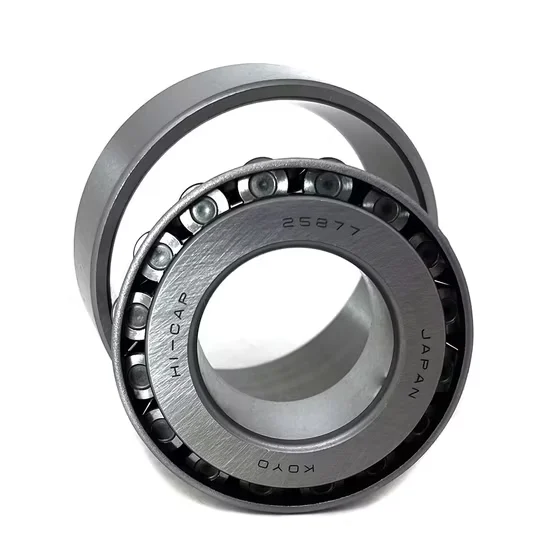
In elevator applications, the precision and authenticity of Koyo traction and guide bearings are the absolute lifelines for safety and smooth operation. Compromising on sourcing directly risks catastrophic failures, severe vibration, and client rejections. Genuine Koyo bearings for elevators require verification of ISO traceability documents and packaging integrity, not just visual inspection. This is the core reality for any serious distributor or OEM.
The difference between a smooth ride and a liability lawsuit often lies in the internal clearance tolerances of the bearings installed in the traction machine. I learned this the hard way during my early days working in quality control at a workshop, long before I moved to Jakarta to handle export operations. The transition from inspecting parts on a bench to managing supply chains in Southeast Asia revealed a harsh truth: the market is flooded with components that look right but fail under load.
Why are Koyo bearings critical for elevator traction and guide systems?
Precision tolerances directly dictate ride comfort and braking safety.
Elevator systems operate under unique stress profiles that differ significantly from general industrial machinery. The traction sheave bearings must handle high radial loads while maintaining minimal friction to ensure energy efficiency and precise floor leveling. Meanwhile, guide wheel bearings endure constant lateral pressure and shock loads as the car moves along the rails. Using standard commercial-grade bearings in these positions is a recipe for premature failure.
The critical factor here is not just the dynamic load rating, but the consistency of that rating across every single unit in a batch. In my experience, even minor deviations in internal clearance can lead to micro-vibrations. These vibrations are often misdiagnosed as motor issues or rail misalignment, but they frequently stem from bearings that do not meet the specific P5 or P4 precision grades required for high-speed elevators.
When I visited a manufacturing facility in Southeast Asia, I observed how engineers selected bearings based solely on catalog dimensions. They overlooked the importance of the cage material and lubrication compatibility for enclosed shaft environments. Genuine Koyo bearings for elevators are engineered with specific heat treatment processes that enhance fatigue resistance. This is not a marketing claim but a physical necessity for components that may run continuously for years without maintenance access.
For OEMs, the choice of bearing affects the entire system’s acoustic profile. A noisy elevator is often perceived as unsafe by passengers, regardless of its actual mechanical integrity. By specifying authentic Koyo traction sheave bearings, manufacturers ensure that the noise levels remain within acceptable limits defined by international safety standards. This level of performance cannot be achieved with generic alternatives that lack rigorous quality control during production.
How to distinguish genuine Koyo elevator bearings from counterfeits?
Strict verification of ISO traceability docs and packaging is the only reliable method.
Counterfeiters have become sophisticated. They replicate logos, box colors, and even holographic stickers. However, they rarely forge the complete chain of documentation that accompanies genuine products. When I source inventory now, I do not rely on the appearance of the bearing alone. I demand the full set of traceability documents that link the specific batch number to the manufacturer’s production records.
A common mistake among distributors is assuming that a lower price indicates a direct factory deal. In reality, it often signals a mixed batch where genuine items are diluted with fakes. To avoid this, one must check the laser etching on the bearing ring. Genuine Koyo products feature precise, deep etching that is resistant to wear. Counterfeits often use shallow printing that fades quickly or is slightly misaligned.
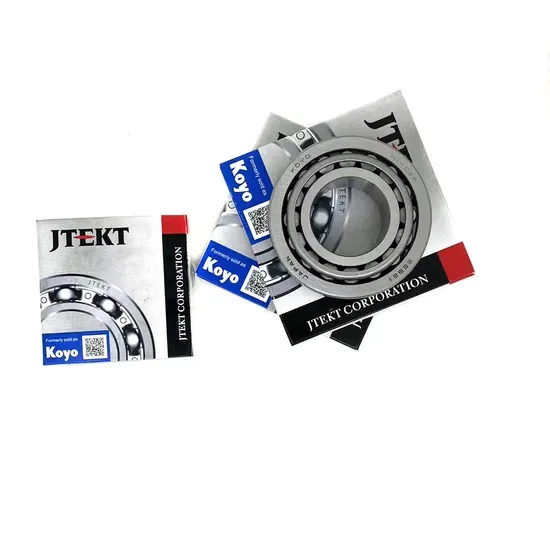
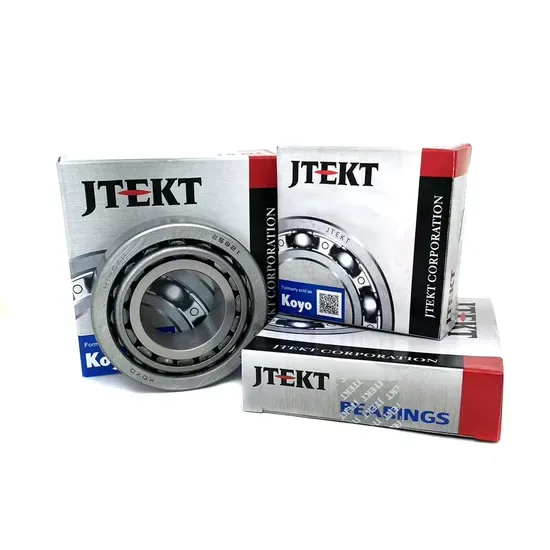
Furthermore, the packaging itself offers clues. Original boxes use specific cardboard grades and printing techniques that are difficult to replicate cost-effectively. But the most definitive proof lies in the paperwork. Each genuine Koyo elevator guide bearing should come with a certificate of conformity that includes the heat number, inspection date, and dimensional verification data. If a supplier cannot provide these documents immediately, the risk of dealing with counterfeit goods is extremely high.
I once encountered a batch of bearings that looked perfect externally. The boxes were intact, and the bearings shone with fresh oil. However, upon requesting the traceability docs, the supplier hesitated and provided vague photocopies. We tested a sample unit and found the internal clearance was out of tolerance. This incident reinforced my rule: no documents, no deal. It is better to lose a sale than to deliver a product that could cause an elevator shutdown.
What happens when fake bearings are installed in elevators?
Counterfeits cause severe vibration, abnormal noise, and catastrophic client rejections.
The consequences of using non-genuine parts are not just technical; they are financial and reputational. I recall a specific case involving an elevator assembly plant in Southeast Asia. To cut costs, the procurement team sourced a batch of bearings from a non-traceable supplier. The parts appeared identical to the genuine Koyo bearings they had used previously.
After installation, the elevators began to exhibit severe vibration and abnormal noise. The issue was not isolated to one unit but affected the entire batch. The end-client, a major property developer, refused to accept the handover. They demanded a full索赔 (claim) for the replacement of all installed units, which included labor, downtime, and penalty fees. The cost of replacing the bearings was a fraction of the total loss incurred due to the project delay and reputational damage.
This scenario highlights a counter-intuitive view: most people think abnormal noise is just a lubrication issue. In reality, it is often caused by micro-vibrations from counterfeit bearings with out-of-tolerance internal clearances. These tiny deviations create uneven load distribution, leading to rapid wear and eventual failure.
For MRO providers, the stakes are equally high. An emergency replacement in a high-rise building requires parts that work immediately. Installing a fake bearing might solve the immediate problem, but it risks a repeat failure within weeks. This leads to unplanned downtime and erodes trust with the building manager. Using genuine Koyo bearings in elevators ensures that the replacement part meets the original equipment specifications, minimizing the risk of recurring issues.
How to optimize bearing sourcing for elevator OEMs and MROs?
Flexible MOQ and mixed-batch consolidation from verified global suppliers ensure both safety and cost-efficiency.
Sourcing strategy for elevator components must balance cost with certainty. For OEMs, buying in bulk from official channels is ideal but often comes with high minimum order quantities and long lead times. For MRO operators, the need is for speed and variety. They may need a single specific bearing for an urgent repair, not a pallet of identical units.
This is where a specialized global supplier adds value. By consolidating orders from multiple brands and sizes, it is possible to achieve competitive pricing without compromising on authenticity. I have seen many distributors struggle with inventory management, holding stock that moves slowly while lacking fast-moving items. A flexible sourcing partner can provide mixed-brand, genuine spot inventory with complete traceability docs.
When evaluating a supplier, look for their ability to provide technical support. Can they help you cross-reference equivalent models if a specific part number is obsolete? Do they offer failure analysis services to help you understand why a bearing failed in the field? These services are crucial for long-term partnership.
Moreover, consider the logistics. Shipping single units internationally can be expensive. Consolidating multiple orders into one shipment reduces freight costs and simplifies customs clearance. This approach is particularly beneficial for regional distributors in markets like the Middle East, Africa, and Latin America, where import regulations can be complex. By working with a supplier who understands these challenges, you can streamline your supply chain and focus on serving your customers.
Conclusion
Authenticity is non-negotiable in elevator safety.
Genuine Koyo bearings for elevators are essential for ensuring smooth operation and passenger safety. Verifying traceability documents and avoiding non-certified sources prevents costly failures and reputational damage. Whether for OEM production or MRO repairs, prioritizing authenticated components from reliable global partners is the only sustainable strategy.