Most bearing failures in harvesters are not caused by poor lubrication, but by counterfeit cages shattering under impact.
Genuine Koyo bearings are critical for harvester reliability under high-load conditions. Sourcing authentic parts with full traceability prevents catastrophic failures and costly downtime during peak harvest seasons. The primary risk is not wear, but the structural failure of inferior materials in fake components when subjected to the extreme shock loads typical of agricultural threshing systems.
I still remember the smell of burnt oil and the sight of a farm owner in Kano State, Nigeria, standing next to his stalled combine harvester. It was the height of the dry season, and the dust was thick enough to taste. The spindle had seized, and the machine was dead in the field. When we cracked open the housing, the cause was immediate and obvious: the cage of the tapered roller bearing had fractured into pieces. It was not a genuine Koyo part. It was a cheap imitation that could not handle the high-impact loads of the threshing cylinder. That incident shifted my perspective from simple sales to rigorous quality verification. I spent the following weeks running between ports and warehouses, replacing failed units with authentic stock, learning that in agricultural machinery, the cost of a fake bearing is measured in lost harvest revenue, not just the price of the part.
Understanding why these failures happen requires looking beyond the surface. The demand for Koyo bearings in harvesters is driven by their ability to withstand specific operational stresses. However, the market is flooded with counterfeits that look identical on the outside but fail catastrophically under load.
Why Do Koyo Bearings Fail in Harvesters?
High impact loads expose counterfeit material flaws that standard lubrication cannot fix.
The operating environment of a combine harvester is brutal. Threshing cylinders and augers subject bearings to sudden, heavy shock loads as they process dense crops and encounter foreign objects like stones or metal debris. Genuine Koyo tapered roller bearings are engineered with high-purity steel and precise heat treatment to absorb these shocks without deforming. Counterfeit versions often use lower-grade steel with inconsistent hardness and poorly manufactured cages.
When a fake bearing enters a high-load zone, the cage—the component that keeps the rollers spaced correctly—becomes the weak link. Under normal conditions, it might seem fine. But when a shock load hits, the inferior material cannot flex or absorb the energy. Instead, it fractures. This fracture leads to immediate roller misalignment, rapid heat generation, and total seizure of the shaft.
I have seen this pattern repeat across different regions. A distributor in Southeast Asia once reported a batch of harvesters returning with seized main shafts after just two weeks of operation. The operators blamed the lubrication system. However, upon inspection, the grease was clean and adequate. The real culprit was the brittle cage material in the counterfeit bearings. The failure was not gradual; it was instantaneous. This is why relying on visual inspection alone is insufficient. The internal metallurgical quality is what determines survival in a harvester.
The misconception that cheaper bearings save money is dangerous. The cost of replacing a seized harvester shaft, including labor and lost harvesting time, far exceeds the premium paid for genuine parts. For distributors and OEMs, understanding this dynamic is crucial when selecting Koyo bearings in harvesters for their inventory.
How to Spot Fake Koyo Tapered Roller Bearings?
Check cage material, marking clarity, and packaging integrity to identify counterfeits.
Identifying fake bearings requires a combination of visual inspection and tactile assessment. Counterfeiters have become sophisticated, but they often cut corners on details that are difficult to replicate without expensive tooling. Here are the key indicators to watch for:
| Inspection Point | Genuine Koyo Bearing | Counterfeit Bearing |
|---|---|---|
| Cage Material | Uniform, smooth finish; robust construction | Rough edges; inconsistent thickness; brittle feel |
| Marking Clarity | Laser-etched or deeply stamped; crisp fonts | Shallow stamping; blurred characters; uneven spacing |
| Packaging | High-quality box; clear holographic seals; correct part numbers | Flimsy cardboard; missing security features; typos in text |
| Roller Surface | Mirror-like polish; no visible scratches | Dull finish; minor surface imperfections |
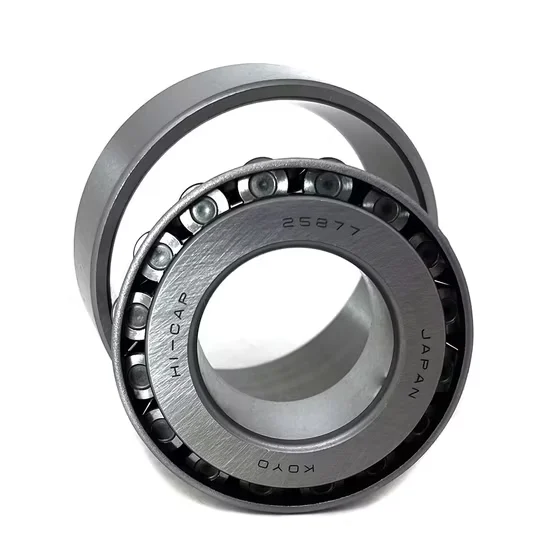
The cage is the most telling component. In genuine Koyo tapered roller bearings, the cage is made from high-strength steel or polymer, depending on the series, and is manufactured to precise tolerances. It should feel solid and have a consistent finish. Fake cages often have rough edges or visible burrs from poor machining.
Markings are another critical check. Genuine bearings have clear, deeply etched or stamped logos and part numbers. The font is consistent and sharp. Counterfeits often have shallow markings that can be rubbed off easily, or the font may look slightly off. I once inspected a shipment where the “Koyo” logo was slightly tilted, a subtle sign that the stamping die was not original.
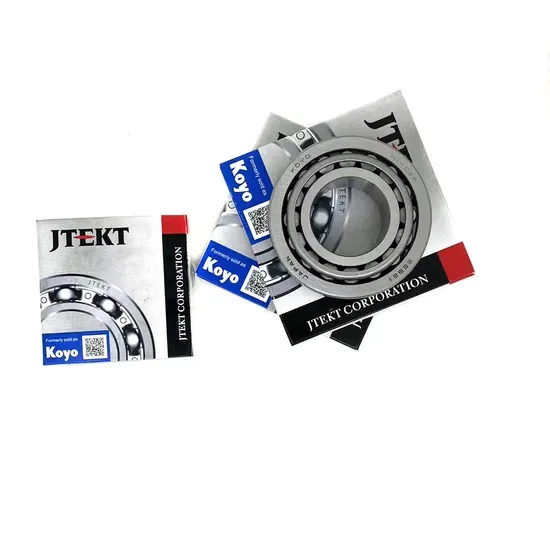
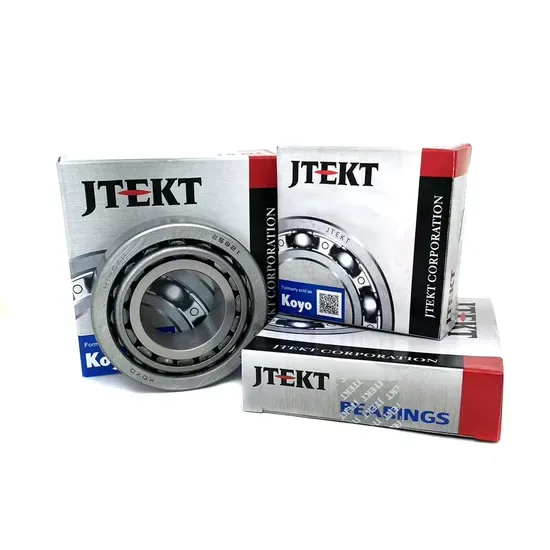
Packaging also provides clues. Authentic Koyo bearings come in high-quality boxes with specific security features, such as holographic seals and barcodes that can be traced. Fake packaging often uses lower-quality cardboard and may lack these security elements. For buyers sourcing Koyo bearings in harvesters, demanding to see the packaging before opening the box is a simple but effective first step.
What Documents Prove Bearing Authenticity?
Demand mill certificates and official traceability codes to verify origin.
Visual inspection is useful, but documentation is the ultimate proof of authenticity. Genuine Koyo bearings come with a chain of custody that traces them back to the manufacturer. This includes mill certificates, which detail the steel composition and heat treatment processes, and traceability codes that can be verified with the brand.
Mill certificates are technical documents that confirm the bearing meets specific industry standards. They include data on material purity, hardness, and dimensional accuracy. For Koyo bearings in harvesters, these certificates are essential for verifying that the parts can handle the required load ratings. Without them, there is no guarantee that the bearing is made from the correct material.
Traceability codes are unique identifiers printed on the bearing or its packaging. These codes can be entered into the manufacturer’s database to confirm the production batch and date. This level of transparency is rare in counterfeit products, which often reuse old codes or provide none at all. I advise buyers to always request these codes and verify them before accepting a shipment.
In one case, a European distributor avoided a large batch of fakes by requesting traceability codes for a recent order. The supplier could not provide valid codes, and the deal was cancelled. This simple step saved the distributor from potential liability and reputational damage. For MRO operators and OEMs, insisting on full documentation is not just about quality; it is about risk management.
How to Source Genuine Koyo Bearings Globally?
Use consolidated suppliers for mixed-brand, traceable bulk orders.
Sourcing genuine bearings globally can be challenging, especially for distributors who need to stock multiple brands and sizes. Working directly with official brand channels can be slow and expensive, while local markets are rife with counterfeits. The solution is to partner with professional global suppliers who specialize in consolidated sourcing.
These suppliers maintain large spot inventories of genuine products from premium brands, including Koyo, SKF, FAG, and NSK. They offer flexible MOQs, allowing buyers to order single units for emergency repairs or full container loads for stock replenishment. More importantly, they provide complete traceability documentation for every item, ensuring that each bearing is authentic.
For regional dealers supplying multiple harvester models during peak season, mixed-batch consolidation is a game-changer. Instead of placing separate orders with different manufacturers, buyers can consolidate their needs into a single shipment. This reduces logistics costs and simplifies customs clearance. I have seen distributors in Africa and Latin America streamline their operations by using this approach, ensuring they have the right parts available when farmers need them most.
When selecting a supplier, look for those who offer technical support and failure analysis services. This expertise can help buyers choose the right bearings for specific applications and troubleshoot issues if they arise. For those seeking reliable Koyo bearings in harvesters, a supplier who combines inventory depth with technical knowledge is an invaluable partner.
Conclusion
Authenticity is the foundation of harvester reliability.
Genuine Koyo bearings prevent catastrophic failures by withstanding high-impact loads that counterfeit parts cannot. Verifying authenticity through visual checks and traceability documentation is essential for avoiding costly downtime. Sourcing from reputable global suppliers ensures access to authentic parts with full support.