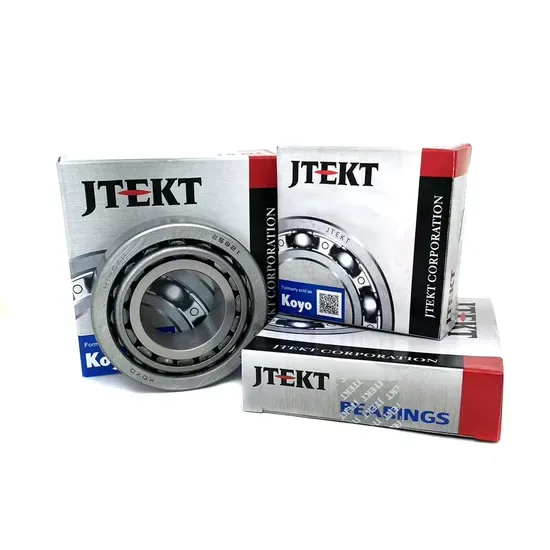
Minor font discrepancies on outer packaging are not printing errors; they are primary red flags for customs inspections.
Authentic Koyo bearing box labels and precise batch codes are critical for customs clearance and avoiding counterfeit rejection in international trade. Verifying the consistency of outer box fonts, matching traceability documents, and ensuring code alignment across mixed batches prevents shipment seizure and ensures smooth procurement for global distributors.
I still remember the cold sweat running down my back in a humid warehouse in Monterrey. A container of bearings I had personally inspected was sitting under a customs hold order. The buyer, a long-term partner, refused to sign the delivery note. He pointed a trembling finger at the batch code printed on the side of a Koyo box. The font was slightly thicker than the standard issue he had received months prior. To an untrained eye, it looked identical. To a customs officer trained to spot counterfeits, it was a discrepancy worth seizing the entire shipment. I spent days digging through archives, comparing holographic seals, and cross-referencing certificate numbers until we proved the variance was due to a specific production line update at the manufacturer’s facility, not forgery. That near-loss taught me that in the global bearing trade, the box is as important as the metal inside.
Understanding these nuances is no longer optional for serious buyers. It is the difference between a cleared container and a legal nightmare. Let us break down exactly what you need to look for.
What are the standard label elements on genuine Koyo boxes?
Genuine Koyo packaging follows a strict visual hierarchy where mandatory text, specific font weights, and barcode placements are non-negotiable standards.
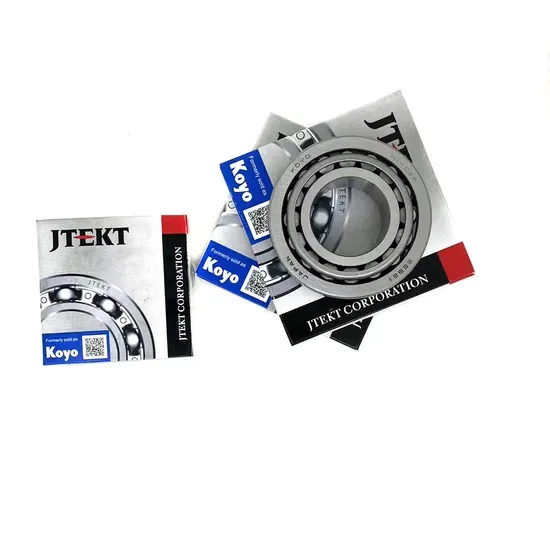
When you receive a shipment, do not just glance at the logo. You must dissect the label. Authentic Koyo boxes feature a consistent layout that includes the brand name, part number, quantity, country of origin, and a unique batch or serial code. The typography used for the part number is distinctively sharp and uniform. Counterfeiters often struggle to replicate the exact ink density and font kerning used by the original manufacturer.
The barcode is another critical element. On genuine units, the barcode scans cleanly and corresponds exactly to the alphanumeric string printed beside it. In many fake packages, the barcode is merely a graphic image that does not decode to the correct part number, or it links to a generic database entry rather than the specific batch details.
| Label Element | Genuine Koyo Standard | Common Counterfeit Flaw |
|---|---|---|
| Font Weight | Uniform, sharp edges, consistent ink density | Slightly blurred, uneven thickness, or bleeding ink |
| Barcode | Scans to exact part number and batch data | Does not scan or links to incorrect generic data |
| Logo Print | Crisp edges, correct color saturation | Faded colors or pixelated edges upon close inspection |
| Batch Code | Laser-etched or high-res printed, aligned perfectly | Misaligned, hand-stamped appearance, or missing |
A European distributor once shared how they caught a sophisticated fake batch because the “KOYO” logo on the box was printed in a slightly different shade of red. It seemed trivial, but under standard lighting, the difference was visible. This attention to detail is why verifying Koyo bearing authenticity starts with the box.
How do batch code fonts reveal counterfeit risks?
Specific visual discrepancies in batch code fonts trigger customs inspections and serve as the first line of defense against counterfeit infiltration.
The batch code is the fingerprint of the bearing. It tells you when and where the unit was made. On genuine Koyo packaging, this code is applied with high-precision printing or laser etching that integrates seamlessly with the box material. Counterfeit operations often use cheaper printing methods that result in fonts that are either too bold, too thin, or slightly misaligned.
I have seen cases where the numbers in the batch code were spaced unevenly. For example, the gap between the year and the month digits was wider than standard. While a buyer might overlook this, customs algorithms and manual inspectors in strict jurisdictions like Brazil or Mexico flag these inconsistencies immediately.
The risk is not just about aesthetics. If the font does not match the manufacturer’s current standard, it suggests the box was repackaged or printed by a third party. This breaks the chain of custody. When I audit incoming stock now, I use a magnifying glass to check the edges of the characters. Genuine prints have clean, sharp boundaries. Fake prints often show micro-bleeding where the ink spreads into the cardboard fibers.
A Middle East steel mill operator once rejected a full container because the batch code font on 20% of the boxes looked “digitally printed” rather than industrially marked. They were right. The supplier had tried to mix genuine old stock with new fakes in identical boxes, but failed to match the printing technology. The entire lot was returned, causing weeks of downtime.
Which traceability documents must match the outer box codes?
Aligning packing lists, certificates of origin, and quality certificates with physical outer box codes is mandatory for successful customs clearance.
Having a genuine-looking box is only half the battle. The paperwork must tell the same story. Every digit in the batch code on the box must appear identically on the Certificate of Origin (COO) and the manufacturer’s quality certificate. If the box says “Batch 2305A” and the certificate says “Batch 2305B,” you have a problem. Customs officers cross-reference these documents rigorously.
In my experience, the most common error is not fraud, but administrative sloppiness. A supplier might ship a mixed batch but provide a single certificate for the whole lot. This is insufficient for high-value brands like Koyo. Each unique batch code on the outer box should be traceable to a specific production run documented in the papers.
When we prepare shipments, we ensure that the packing list itemizes each box’s batch code if they vary. This allows the buyer to perform a random spot check upon arrival. If the codes match, the goods are likely genuine. If they do not, the buyer has immediate grounds to question the supply chain.
A US buyer once faced a delay because the COO listed a generic “Japan” origin, while the boxes specified a particular factory code that did not align with the documented facility. It took weeks to resolve because the initial documentation was vague. Precise matching eliminates this ambiguity.
How to handle mixed-brand containers during customs clearance?
Segregating and verifying Koyo labels alongside other brands in a single container requires meticulous organization to prevent cross-contamination of documentation.
Many buyers consolidate orders to save on shipping costs. You might have SKF, FAG, and Koyo bearings in one container. This is efficient, but it increases the risk of confusion during customs inspection. Officers may pull a random box from the middle of the stack. If they find a Koyo box with unclear labeling next to a different brand’s paperwork, they may suspect the entire container is compromised.
To mitigate this, we physically segregate brands within the container using clear dividers or separate pallets. More importantly, the packing list must clearly delineate which pallet contains which brand and which batch codes. This makes it easy for inspectors to verify Koyo bearing customs clearance documents without having to dig through unrelated stock.
I recall a shipment to Southeast Asia where a mixed container was held because the inspector found a Koyo box with a damaged label on a pallet primarily listed for another brand. Because the documentation was not segregated clearly, they assumed the Koyo units were unauthorized additions. We had to provide a detailed map of the container load plan to prove that the units were part of the declared order.
Ensuring that each Koyo box is easily accessible and its corresponding documents are readily available prevents these misunderstandings. It shows professionalism and respect for the regulatory process.
Conclusion
Authenticity lies in the details of the label, the precision of the font, and the consistency of the paperwork.
Verifying Koyo bearing box labels and codes is not just about avoiding fakes; it is about securing your supply chain against costly customs delays. By focusing on font accuracy, document alignment, and proper segregation in mixed shipments, you protect your business from rejection and seizure. Treat every box as a legal document, and your clearance process will remain smooth and predictable.