Cheap bearings are the most expensive components you will ever buy.
Selecting genuine Koyo bearings for industrial motors is not merely a procurement choice; it is a critical engineering decision that dictates operational reliability. The core answer to maintaining motor integrity lies in verifying authenticity through complete traceability documentation and matching internal clearance specifications to the specific thermal dynamics of the motor application. Without these two pillars, even premium brands fail prematurely.
I still remember the humidity in that Chicago exhibition hall years ago. I was helping a client outfit a series of high-speed industrial motors, eager to cut costs on the bearing budget. I sourced what appeared to be Koyo deep groove ball bearings from a non-official channel. The price was irresistible. Two months later, the phones started ringing. Every motor was overheating, emitting a distinct, grinding whine that signaled imminent catastrophic failure. When we dismantled them, the truth was ugly: they were refurbished units, repackaged as new. The cages were distorted, and the raceways showed micro-pitting consistent with previous heavy loads. That incident cost me far more than the savings I had chased. It taught me that in the world of industrial motion, there is no such thing as a bargain on rotating elements.
This experience shapes how I approach every inquiry today. Buyers often focus on the initial purchase price, but the real metric is total cost of ownership. Let us explore why authenticity and precise specification matter more than the sticker price.
Why Koyo Bearings Dominate Industrial Motor Applications?
High-speed stability and low noise characteristics make these bearings the default choice for precision motor operations.
Industrial motors operate under continuous stress, where even minor imbalances amplify into significant vibrations. Koyo bearings have earned their reputation not through marketing, but through consistent performance in high-RPM environments. The manufacturing consistency ensures that the rolling elements maintain uniform contact with the raceways, reducing friction heat generation.
When a motor spins at thousands of revolutions per minute, the bearing must handle both radial and axial loads without introducing parasitic drag. Genuine Koyo motor bearings are engineered with precise geometry that minimizes cage instability. This is crucial for applications like HVAC systems, electric vehicle drivetrains, and industrial pumps, where acoustic noise is a key performance indicator.
I recall a case involving a European manufacturer of high-speed spindles. They were experiencing intermittent vibration issues that plagued their quality control tests. After switching to verified genuine Koyo deep groove ball bearings for motors, the vibration amplitude dropped noticeably. The difference was not in the material alone, but in the micron-level precision of the grinding process that only authorized production facilities can guarantee. Counterfeit or lower-tier alternatives often lack this geometric fidelity, leading to early fatigue.
The dominance of Koyo in this sector is also due to their wide range of specialized seals and lubricants. For motors operating in dusty or humid environments, the right seal design prevents contaminant ingress, which is the leading cause of premature bearing failure.
How to Match Koyo Bearing Specs to Motor Conditions?
Aligning load, speed, and thermal clearance prevents premature wear and catastrophic seizure.
Many engineers make the mistake of assuming any deep-groove ball bearing fits as long as the dimensions match. This is a dangerous oversimplification. The internal clearance of the bearing must strictly match the thermal expansion characteristics of the motor shaft and housing. If the clearance is too tight, thermal expansion during operation will eliminate the running clearance, causing the bearing to lock up. If it is too loose, excessive play leads to vibration and noise.
Selecting the correct clearance class, such as C3 or C4, depends on the operating temperature differential. For standard industrial motors, a C3 clearance is often recommended to accommodate the heat generated by the windings and the friction within the bearing itself.
| Parameter | Incorrect Selection | Correct Selection |
|---|---|---|
| Internal Clearance | Standard (C0) for high-temp motor | C3 or C4 for thermal expansion |
| Lubricant Type | Generic grease | Motor-specific high-speed grease |
| Fit Tolerance | Loose fit on shaft | Precise interference fit per ISO |
| Seal Material | Standard rubber | High-temperature resistant elastomer |
A Middle East steel mill once faced repeated failures in their cooling fan motors. The ambient temperature was extreme, and the motors ran hot. They had been using standard clearance bearings. After analyzing the thermal profile, we recommended switching to Koyo bearings with C4 clearance and high-temperature lubricant. The result was a substantial extension of service life, eliminating the monthly replacement cycle they had endured.
Matching specs also involves understanding the load rating. Dynamic load ratings determine fatigue life, while static load ratings prevent permanent deformation during standstill or shock loads. Ignoring these factors leads to spalling and flaking of the raceways.
What Are the Hidden Costs of Non-Genuine Motor Bearings?
Refurbished bearings lead to severe overheating and catastrophic motor failures, costing exponentially more than the initial savings.
The market is flooded with bearings that look authentic but lack the metallurgical integrity of the original. These are often refurbished units, where old bearings are cleaned, polished, and repackaged. To the untrained eye, they appear new. However, the subsurface fatigue damage remains. When installed in an industrial motor, these hidden defects propagate rapidly under load.
The hidden costs are not just the price of the replacement bearing. They include the labor for disassembly, the downtime of the production line, and the potential damage to the motor shaft and housing. In one instance, a Latin American textile plant saved a small amount on bearings but ended up replacing three entire motors due to shaft scoring caused by failed counterfeit bearings. The total loss was a mid-six-figure sum, far exceeding the cost of genuine parts.
Most buyers think cheap bearings save costs; truly, refurbished parts cause exponentially higher replacement and downtime costs. The risk is not just financial; it is operational. Unplanned downtime disrupts supply chains and damages reputations.
Furthermore, non-genuine bearings often use inferior steel with higher inclusion density. This reduces the fatigue life significantly. Genuine Koyo bearings use high-purity steel processed to minimize impurities, ensuring consistent performance.
Verifying the source is the only way to avoid these pitfalls. Relying on price alone is a gamble with poor odds.
How to Verify Koyo Bearing Authenticity and Traceability?
Demanding original factory certificates and batch tracking is the only safeguard against counterfeits.
In my current role, I see many distributors who claim to offer genuine products but cannot provide verifiable proof. Authenticity is not a claim; it is a document trail. Every genuine Koyo bearing comes with a unique identification code that links it to its production batch. This traceability is essential for customs clearance and quality assurance.
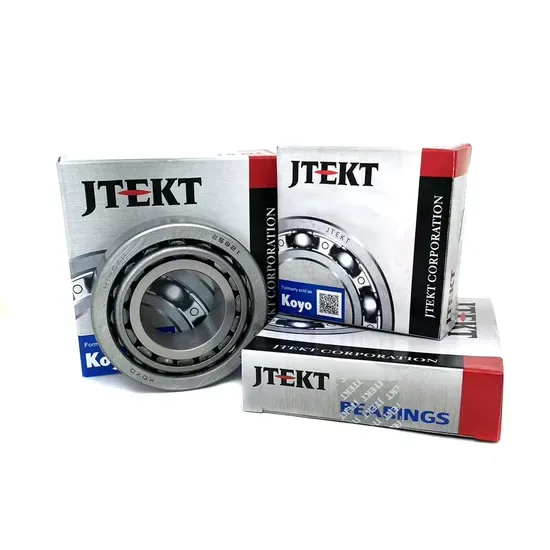
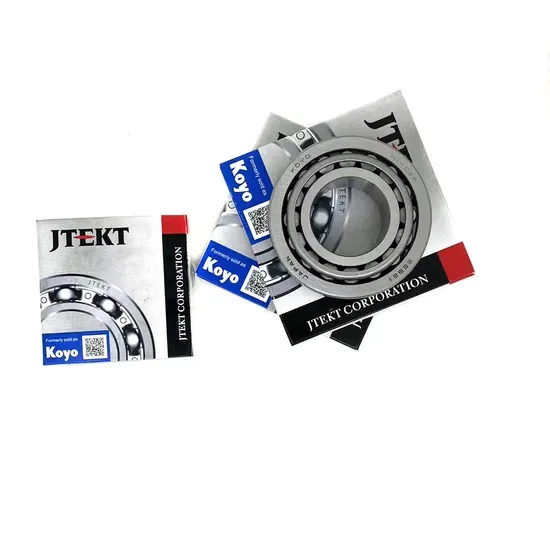
To verify authenticity, buyers should request the original certificate of conformity from the manufacturer. This document includes details such as the production date, batch number, and inspection results. Without this, the bearing is suspect. Additionally, the packaging should show no signs of tampering. Genuine Koyo packaging uses specific materials and printing techniques that are difficult to replicate.
A US buyer once encountered a shipment of bearings that looked perfect but lacked proper documentation. Upon testing, the hardness values were inconsistent, indicating mixed sources. We rejected the entire batch. This incident highlights the importance of demanding full traceability docs for customs and quality checks.
We provide 100% genuine Koyo supply with complete traceability documentation. Our system allows clients to track every unit from the factory floor to their warehouse. This level of transparency is not just a service; it is a necessity for serious industrial operations. We support technical selection to ensure the right bearing is chosen for the application, preventing the mismatches that lead to failure.
Our approach combines global sourcing capabilities with rigorous quality control. We stock genuine products from Koyo and other premium brands, ensuring that our clients receive exactly what they order. Flexible MOQ options allow for both emergency spare-part orders and large project consolidations. This flexibility, combined with technical expertise, helps our partners minimize risk and maximize efficiency.
Conclusion
Authenticity and precise specification are non-negotiable for industrial motor reliability.
Choosing the right bearing involves more than checking dimensions. It requires verifying the source through traceable documentation and matching the internal clearance to the operating conditions. Genuine Koyo bearings offer the precision and durability needed for demanding industrial applications. Avoid the hidden costs of counterfeits by insisting on proof of authenticity. Reliable supply chains and technical support are essential partners in maintaining operational continuity.