Buying the cheapest P4 grade is often the most expensive mistake in spindle assembly.
Selecting genuine Koyo bearings for machining center spindles requires strict focus on precision retention, internal clearance, and original traceability rather than just unit price. The core argument for any serious procurement strategy is that authenticity and technical selection outweigh initial cost savings, as mixed or non-original packaging leads to microscopic vibrations and rapid spindle failure.
I still remember the chill of a warehouse in Hanover during a trade show, not from the weather, but from the realization of a costly error. Years ago, while supplying a European machine tool builder, I attempted to optimize a large order by mixing in a batch of P4 grade bearings that lacked original factory packaging. The logic seemed sound at the time: the specifications matched, and the price was better. However, once installed, the spindles exhibited high-temperature vibration under load. The result was a batch rejection that cost several times the initial savings. That incident shifted my entire approach to sourcing. Now, I inspect every shipment for traceability codes and verify internal clearance specifications before they leave the warehouse. This experience underscores why verifying the source is as critical as verifying the dimension.
Why Koyo Bearings Dominate High-End Spindles?
Koyo bearings have secured a dominant position in high-end spindle applications due to their superior material quality and precision retention under high-speed thermal loads. Unlike standard industrial bearings, spindle units operate under extreme conditions where even micron-level deviations can cause catastrophic failure. The manufacturer’s use of high-purity steel and controlled heat treatment processes ensures that the bearings maintain their geometric stability even when subjected to significant thermal expansion.
The key differentiator is not just the initial precision, but how well that precision holds up over time. In high-RPM applications, friction generates heat, which can alter the internal clearance of the bearing. If the material is not properly stabilized, this leads to preload changes, increased vibration, and eventual seizure. Koyo’s production facilities utilize advanced grinding techniques that minimize surface roughness, reducing friction torque and heat generation. This allows the spindle to run cooler and last longer, which is a critical factor for OEMs who need to guarantee machine uptime.
For a Koyo spindle bearings supplier, understanding this material advantage is essential. It is not enough to simply stock the part number; one must understand the metallurgical background that allows these components to perform in demanding CNC environments. The consistency of the steel quality means that batch-to-batch variation is minimized, a crucial requirement for mass production of machine tools.
How to Select the Right Precision Grade and Clearance?
Selecting the correct precision grade and internal clearance is a technical exercise that goes beyond reading a catalog. Most buyers assume that a P4 grade is sufficient for all high-speed applications, but the true cause of failure is often improper internal clearance under thermal expansion. The interaction between precision grade and clearance determines the bearing’s ability to handle axial and radial loads without generating excessive heat.
High precision angular contact ball bearings for CNC machines are typically available in P4 and P2 grades. While P4 is common, P2 offers tighter tolerances for ultra-high-precision applications. However, the grade alone does not dictate performance. The internal clearance, often designated by codes such as C2 or C3, must be matched to the specific operating temperature and speed of the spindle. A clearance that is too tight will lead to overheating, while one that is too loose will cause vibration and reduced rigidity.
| Selection Factor | Standard Industrial Use | High-Speed Spindle Use | Ultra-Precision Spindle Use |
|---|---|---|---|
| Precision Grade | P0 / P6 | P4 | P2 |
| Internal Clearance | C3 / Normal | C2 / Special | Custom Preload |
| Thermal Stability | Standard | Controlled | Highly Stabilized |
| Traceability Level | Basic | Full Batch-Level | Certified Original |
This table highlights the qualitative differences in selection criteria. Note that for spindle applications, “Special” or “Custom” clearance is often required, which necessitates direct consultation with the manufacturer or a knowledgeable supplier.
A case from a North American aerospace manufacturer illustrates this point. They experienced frequent spindle failures despite using P4 bearings. Upon analysis, it was found that the internal clearance was not optimized for their specific coolant temperature and cutting speeds. Switching to a bearing with a tailored preload and verified Koyo P4 P2 bearing traceability resolved the issue, extending spindle lifespan significantly. This demonstrates that technical selection support is as valuable as the product itself.
What Are the Hidden Risks of Non-Original Bearings?
The market is flooded with bearings that look identical to genuine products but lack the underlying quality control. The hidden risks of non-original bearings include microscopic vibrations, reduced fatigue life, and sudden catastrophic failure. These issues are often not apparent until the bearing is installed and run under load, making them difficult to detect during incoming inspection.
One major risk is the mixing of non-original packaging in orders. Unscrupulous suppliers may replace genuine bearings with lower-grade equivalents, repackaging them to look authentic. This practice leads to P4 vs P5 grade deviation, where the actual precision is lower than specified. The result is increased vibration amplitude, which affects the surface finish of machined parts and accelerates wear on the spindle housing.
Another risk is the lack of proper heat treatment. Genuine Koyo bearings undergo rigorous deep-freeze and tempering processes to stabilize the steel. Counterfeit or substandard bearings often skip these steps to cut costs. This leads to premature dimensional changes during operation, causing the preload to shift and the bearing to fail. For a machine tool OEM, this translates into warranty claims and reputational damage.
I have seen cases where a entire fleet of machines suffered from inconsistent performance due to a single batch of mixed bearings. The lead time impact of replacing these failed spindles was severe, halting production for weeks. This underscores the importance of sourcing from a supplier who guarantees authenticity and provides full documentation. The cost of a failed spindle is far higher than the premium paid for genuine components.
How to Verify Authenticity and Traceability?
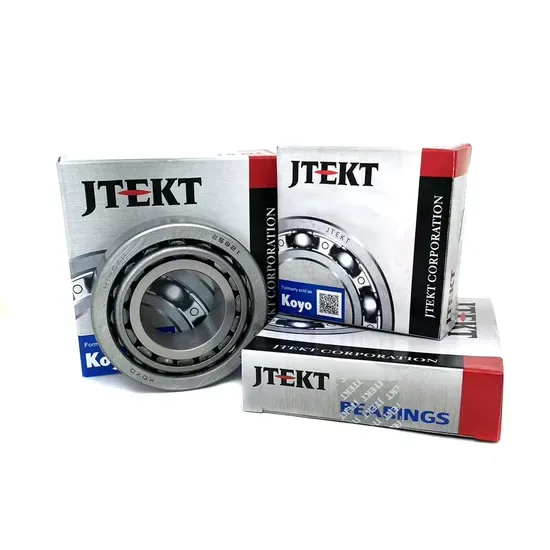
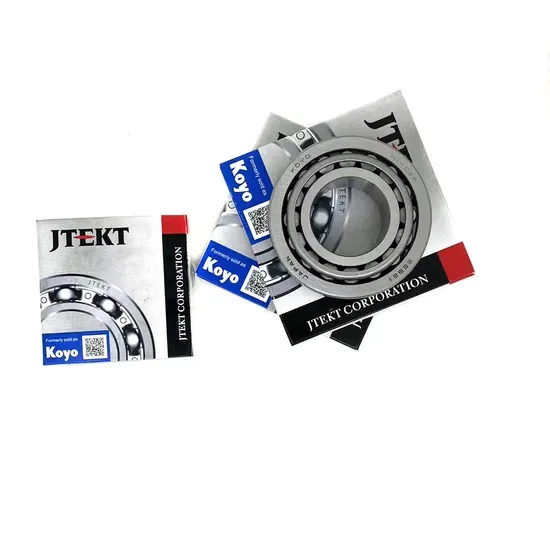
Verifying authenticity and traceability is the final safeguard against counterfeit products. Demand original factory certificates, batch traceability, and standardized packaging. Every genuine Koyo bearing comes with specific markings and packaging features that can be verified. These include laser-etched lot numbers, holographic seals, and specific box designs that are difficult to replicate.
Koyo P4 P2 bearing traceability is a critical feature for high-end applications. This system allows users to track the bearing back to its production batch, ensuring that it meets the specified quality standards. A reliable Koyo spindle bearings supplier will provide these traceability documents upon request, including material certificates and inspection reports.
To verify authenticity, check the following:
- Packaging: Ensure the box is sealed with official tape and has clear, high-quality printing.
- Markings: Inspect the bearing for laser-etched codes that match the packaging.
- Documentation: Request the original certificate of conformity and traceability code.
- Supplier Reputation: Work with suppliers who have a long-term relationship with the manufacturer and can provide technical support.
A successful long-term supply strategy involves maintaining full traceability for every order. This not only protects against counterfeits but also aids in failure analysis if issues arise. By keeping detailed records, manufacturers can identify trends and improve their selection process. For example, a European wind farm operator reduced maintenance costs by implementing a strict traceability protocol, ensuring that only verified genuine bearings were used in critical gearbox applications.
Conclusion
Authenticity and technical precision are the true drivers of spindle reliability.
Sourcing Koyo bearings for machining center spindles demands a rigorous approach to verification and selection. By focusing on internal clearance, precision retention, and original traceability, buyers can avoid the hidden costs of failure. Partnering with a knowledgeable supplier ensures that every bearing meets the highest standards of performance and reliability.