Price savings on non-genuine bearings are irrelevant when a single vibration event scraps a batch of twelve-inch wafers.
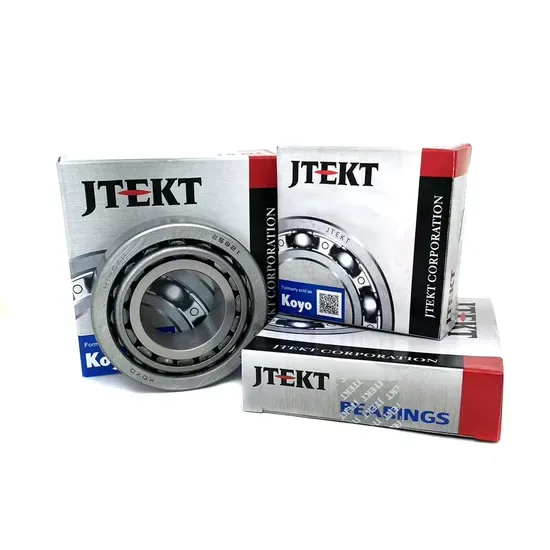
For semiconductor equipment manufacturers and MRO buyers, the only viable sourcing strategy is to procure 100% original KOYO bearings with complete traceability documentation. In wafer handling robotics, microscopic runout from counterfeit or substandard deep-groove bearings generates fatal vibrations that compromise transfer stability and contaminate ISO-class cleanrooms. Authenticity is not a premium feature; it is the baseline requirement for yield protection.
I still recall the silence in a Qingdao assembly hall after a wafer handling robot failed during a high-value transfer test. The buyer had insisted on sourcing cheaper, non-genuine KOYO deep-groove ball bearings to cut costs. The result was not just a mechanical failure but a catastrophic yield loss. The microscopic runout in those fake bearings created resonance frequencies that the robot’s control system could not dampen, causing the end-effector to jitter. That jitter translated into scratched surfaces on a full batch of twelve-inch wafers. The cost of those scrapped chips dwarfed the entire savings from the bearing purchase by several orders of magnitude. That disaster clarified a fundamental truth for me: in cleanroom robotics, traceability and precision are not marketing buzzwords. They are the physical barriers between profit and total loss. Now, I help global clients navigate the complex market, ensuring every spherical or angular contact bearing we ship is verified, documented, and perfectly matched for ultra-precision applications.
This reality drives the demand for a reliable Koyo Bearings for Wafer Handling Robots Wholesale Supplier who understands that technical compliance outweighs initial price tags.
Why Wafer Handling Robots Demand Ultra-Precision KOYO Bearings?
Microscopic runout directly dictates wafer yield and transfer stability. In the semiconductor industry, the margin for error is measured in microns, and often sub-microns. Wafer handling robots operate at high speeds while maintaining extreme positional accuracy. Any deviation in the bearing’s geometric precision translates directly into movement error at the end-effector.
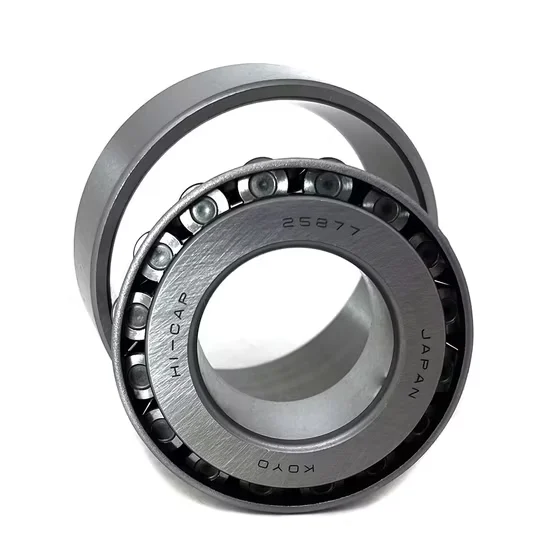
Genuine KOYO bearings are manufactured to strict tolerance classes that ensure minimal radial and axial runout. When a bearing lacks this precision, even if it appears visually identical, the internal clearance and raceway geometry are inconsistent. This inconsistency causes the robotic arm to vibrate at specific frequencies. These vibrations are not always visible to the naked eye but are devastating to the delicate silicon structures being transported.
The dynamic load ratings of these bearings must also match the high-speed acceleration and deceleration profiles of modern robotic arms. Non-genuine parts often use inferior steel or improper heat treatment, leading to premature fatigue under these dynamic loads. This fatigue manifests as increased noise and further degradation of precision over time, creating a compounding failure mode that is difficult to diagnose until yield rates drop noticeably.
Sourcing from a trusted Koyo Bearings for Wafer Handling Robots Wholesale Supplier ensures that the bearings meet the rigorous dynamic and static load requirements necessary for consistent, high-yield operation.
The Hidden Cost of Non-Genuine Bearings in Cleanrooms
Most engineers assume that standard industrial bearings are sufficient for cleanroom environments if they are sealed. This is a dangerous misconception. The primary threat from non-genuine bearings is not just mechanical failure, but particulate contamination and outgassing.
Fake bearings often lack the proper cleaning and packaging protocols required for ISO 14644 cleanroom compatibility. They may retain microscopic dust particles from the manufacturing process or use lubricants that outgas volatile organic compounds. In a semiconductor fab, these particles settle on wafers, causing defects that render the chips useless. The outgassing can also contaminate the vacuum environment or sensitive optical sensors within the tool.
Furthermore, the vibration caused by poor-quality bearings accelerates wear on other components, generating additional metallic debris. This debris becomes airborne within the tool, exacerbating the contamination issue. The cost of cleaning a contaminated chamber and replacing affected wafers is substantial, often reaching mid-six-figure losses for a single incident.
| Contamination Factor | Genuine KOYO Bearing | Non-Genuine/Counterfeit Bearing |
|---|---|---|
| Particulate Control | Certified cleanroom packaging and cleaning | Uncontrolled, likely residual manufacturing dust |
| Lubricant Outgassing | Low-outgassing, validated lubricants | Unknown composition, high risk of volatile release |
| Vibration-Induced Debris | Minimal due to precise geometry | Noticeably higher due to runout and imbalance |
| Traceability | Full batch-level documentation | None or forged documents |
A European semiconductor equipment builder once switched to a cheaper alternative for their entry-level models. Within months, their clients reported increased particle counts in their fab tools. The root cause was traced back to the lubricant and microscopic rust particles from the non-genuine bearings. The recall and replacement cost far exceeded any initial savings.
This is why partnering with a verified Koyo Bearings for Wafer Handling Robots Wholesale Supplier is critical for maintaining cleanroom integrity and avoiding costly contamination events.
Selecting the Right KOYO Bearing Types for Robotic Joints
Not all bearings are suitable for every axis of a wafer handling robot. The selection process requires matching the bearing type to the specific load and precision requirements of each joint.
The main rotational joints typically require angular contact ball bearings. These bearings are designed to handle combined radial and axial loads, which are prevalent in robotic arms due to gravity and inertial forces. Genuine KOYO angular contact bearings offer high rigidity and precise preload options, ensuring minimal deflection under load. This rigidity is essential for maintaining the straightness of the robot’s reach.
Deep-groove ball bearings are often used in less critical axes or for supporting idler rollers. However, even here, precision is paramount. The deep-groove design allows for high-speed operation with low friction, but the quality of the raceway finish determines the noise and vibration levels. Using non-genuine deep-groove bearings in these positions can still introduce systemic vibration that affects the entire arm.
Thrust bearings may be required in specific vertical lift mechanisms to handle pure axial loads. The choice between single-direction and double-direction thrust bearings depends on the robot’s kinematic design. Incorrect selection can lead to premature failure and unexpected downtime.
| Robot Joint Type | Recommended Bearing Type | Key Requirement |
|---|---|---|
| Main Rotational Axis | Angular Contact Ball Bearing | High rigidity, precise preload, combined load capacity |
| Secondary/Idler Axes | Deep-Groove Ball Bearing | Low friction, high speed, minimal runout |
| Vertical Lift Mechanism | Thrust Bearing | Pure axial load capacity, smooth operation |
A Middle East-based equipment integrator struggled with positional drift in their robotic arms. After a thorough audit, we identified that they had used standard deep-groove bearings in place of specified angular contact bearings in the main joints. Switching to the correct genuine KOYO angular contact bearings resolved the drift and extended the maintenance interval significantly.
Expert guidance from a knowledgeable Koyo Bearings for Wafer Handling Robots Wholesale Supplier can prevent such misapplications and ensure optimal robot performance.
How to Verify Authenticity and Traceability
Navigating the global bearing market is fraught with risks of counterfeits. For semiconductor applications, verification is not optional. It requires a systematic approach to documentation and physical inspection.
First, demand complete traceability documentation. Genuine KOYO bearings come with certificates that link the specific batch to the manufacturer’s production records. These documents should include material certifications, heat treatment logs, and quality control data. If a supplier cannot provide this level of detail, the risk of receiving non-genuine parts is high.
Second, inspect the packaging and marking. Genuine bearings have precise, laser-etched markings that are clear and uniform. Counterfeit parts often have poorly printed or stamped markings that can rub off. The packaging should be sealed and labeled with batch numbers that match the accompanying documentation.
Third, consider the supplier’s reputation and audit history. A reliable supplier will have undergone rigorous audits by major semiconductor equipment manufacturers. They will have established processes for handling and storing bearings to prevent contamination before installation.
A US buyer once nearly accepted a shipment of bearings that looked perfect externally. However, upon requesting the traceability certs, the supplier provided vague, generic documents. Further investigation revealed the bearings were refurbished units repackaged as new. By insisting on proper documentation, the buyer avoided a potential disaster in their cleanroom.
Working with a transparent Koyo Bearings for Wafer Handling Robots Wholesale Supplier simplifies this verification process, providing peace of mind and ensuring every component is authentic.
Conclusion
In wafer handling robotics, the cost of failure is measured in scrapped wafers, not just replaced bearings.
Authenticity and ultra-precision are non-negotiable. Microscopic runout and contamination from non-genuine parts pose existential threats to yield and cleanroom integrity. Selecting the correct bearing type and verifying its traceability are critical steps in safeguarding your production line. Partnering with a supplier who prioritizes these technical realities ensures long-term reliability and operational success.